


Designing product experience through scent
Last update on Apr 29, 2026
A familiar scent can bring back a place, a feeling, or a moment long after you first use a product. Even before the texture is assessed or packaging is examined, fragrance often forms the most immediate and lasting impression of a product. This unique ability of fragrance creates an emotional connection. Because of this, it has evolved from a finishing touch into a key part of product design. Increasingly, scent is helping transform personal care products from functional solutions into experiences that:
- shape how consumers perceive the product
- reinforce its value, and
- build lasting relationships between brands and consumers
For fragrance houses, scent plays a central role in product storytelling. Christoph Heil, Head of Sales at LUZI, describes fragrance as “the very first emotional touchpoint between a product and the consumer at the point of sale.” It shapes expectations even before performance can be evaluated.
Because scent is processed rapidly and intuitively, it plays a crucial role in how consumers interpret product quality and efficacy. According to Heil, “a well-crafted scent elevates the entire user experience. It transforms everyday routines into sensorial moments and signals quality from the very first interaction.”
Similarly, Eurofragance emphasizes fragrance’s ability to move products beyond functionality. Luciana Borges, Global Marketing Manager for Personal Care at Eurofragance and Marco Lombardi, Senior Technical Category Manager for Personal Care at Eurofragance, explain that scent often forms the first emotional connection between a product and its user. In this context, fragrance can elevate a formula from functional to experiential. This helps transform daily routines into moments of well-being while increasing perceived product value.
Let’s see what industry experts say about how science, consumer behavior, and innovation are making scent a key driver of high-value, experience-led products.
Fragrance as a signal of quality and performance
Scent does more than create sensory appeal. It also reinforces product positioning and supports performance expectations. Consumers often associate particular olfactive cues with specific benefits. This means fragrance can strengthen the credibility of a product’s claims.
Heil notes that certain scent profiles naturally communicate efficacy. Fresh citrus or herbal notes signal cleanliness and performance. Soft florals or creamy accords suggest nourishment and care.
Borges similarly describes fragrance as a “performance amplifier.” It supports the emotional experience of product use while reinforcing functional benefits. By aligning scent with product positioning, brands can create a more cohesive and intuitive experience that enhances consumer trust.

From daily routines to emotional rituals
As consumers focus more on well-being and self-care, fragrance is playing a bigger role in turning everyday routines into meaningful rituals.
Scent is closely linked to memory and emotion. Because of this, it can shape how people feel when using a product and how often they come back to it. Heil explains that personal care routines are now seen as small but important moments of well-being. Here, fragrance helps to create an emotional connection and reinforce habit formation.
Borges also observes that consumers seek products that deliver emotional benefits alongside functional results. In our busy lives, daily routines are becoming opportunities for comfort, reassurance, and brief moments of escape. Some regular routines include:
Fragrance plays a central role in creating these “feel-good moments”. It helps brands establish deeper engagement with consumers.

The growing influence of scent science
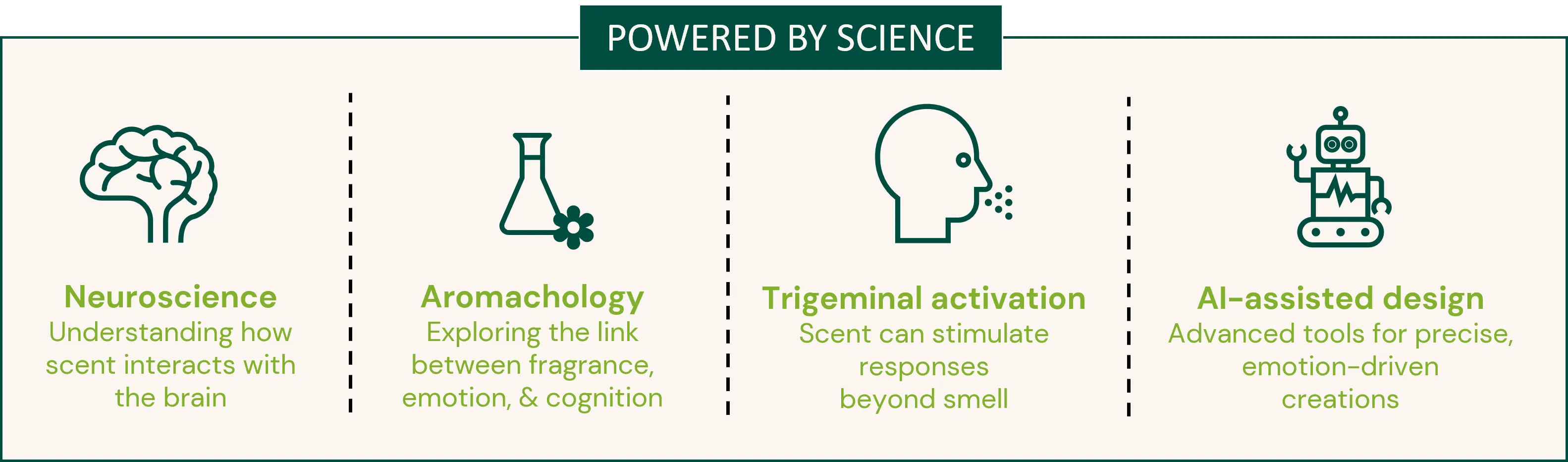
Advances in sensorial research and neuroscience are changing how fragrances are developed for personal care products. Growing interest in neurocosmetics and aromachology is helping researchers better understand how scent can influence emotional and cognitive responses.
Lombardi highlights that fragrance design is increasingly guided by science. It depends on how scent interacts with the brain. The company has studied mechanisms such as trigeminal activation. It has also developed proprietary technologies like Euphorion™, which is designed to strengthen the perception of ingredients linked to emotional stimulation.
Heil similarly points to growing investment in mood-enhancing fragrance compositions. These aim to deliver benefits consumers can genuinely perceive. While fragrance does not replace functional performance, it can amplify the emotional dimension of product use. This contributes to a more memorable and differentiated experience.
The intersection of fragrance, neuroscience, and well-being is also becoming a growing area of discussion. Topics such as emotional design and sensorial innovation are featured at industry events, including in-cosmetics Global.1
Designing a holistic sensory experience
Fragrance rarely operates in isolation. The factors that contribute to how a product is experienced include:
- texture,
- formulation,
- packaging, and
- visual identity
This means scent must work in harmony with other sensory elements.
Borges highlights that consumers perceive product performance holistically. They do not separate sensory cues into individual components. “For example, a light gel paired with an energizing fragrance creates a very different impression than a rich cream combined with a comforting scent.”
Heil echoes this, noting that texture and fragrance must be aligned. They create coherence and an overall experience that feels seamless, elevated, and premium. When sensory elements work together, the overall perception of quality and premium positioning is strengthened.
For this reason, fragrance is increasingly considered earlier in the product development process. This allows perfumers and formulators to ensure compatibility between ingredients, stability requirements, and desired emotional outcomes.
Fragrance as a driver of differentiation
As brands compete in crowded personal care markets, fragrance is becoming a key way to stand out. It does more than signal efficacy or supporting product claims. It creates distinctive product identities that resonate with consumers on a deeper level.
Heil describes fragrance as a “potential unique selling proposition in itself, with consumers often willing to pay a premium price for products that offer both effectiveness and also a holistic and emotionally engaging scent experience”.
Borges and Lombardi similarly see fragrance evolving into a strategic emotional driver. It transforms everyday personal care into moments of escape and well-being.
This shift is also reflected in emerging fragrance directions, including new interpretations of gourmand profiles designed to:
- evoke comfort,
- curiosity, and
- small moments of indulgence
These sensorial experiences respond to growing consumer interest in products that deliver emotional as well as functional value.

The future of fragrance in personal care
Looking ahead, fragrance is expected to play a bigger role in how consumers experience personal care products. Advances in AI-assisted formulation, biotechnology, and sensorial testing are expanding the possibilities for designing fragrances that align more precisely with emotional and functional goals.
For LUZI and Eurofragance, the future of fragrance lies in its ability to create meaningful connections between product performance and emotional benefit.
As personal care continues to evolve toward experience-led innovation, scent is no longer just a sensory attribute. It is becoming a strategic element that shapes how products are perceived, valued, and remembered.
To find out more about the new Scent Bar and the expanded Fragrance Zone, visit the website here.4
in-cosmetics Global 2026 took place from 14-16 April at the Paris Expo Porte de Versailles, France. For more information about the event, visit the website.1
About RX
RX is a global leader in events and exhibitions, leveraging industry expertise, data, and technology to build businesses for individuals, communities, and organizations. With a presence in 25 countries across 42 industry sectors, RX hosts approximately 350 events annually. RX is committed to creating an inclusive work environment for all our people. RX empowers businesses to thrive by leveraging data-driven insights and digital solutions. RX is part of RELX, a global provider of information-based analytics and decision tools for professional and business customers.2
About RLEX
RELX is a global provider of information-based analytics and decision tools for professional and business customers. RELX serves customers in more than 180 countries and has offices in about 40 countries. It employs more than 36,000 people over 40% of whom are in North America. The shares of RELX PLC, the parent company, are traded on the London, Amsterdam and New York stock exchanges using the following ticker symbols: London: REL; Amsterdam: REN; New York: RELX. Note: Current market capitalization can be found here.3 |