

Latest blue & green advances in natural actives for cosmetics
Last update on Apr 14, 2020
New, natural raw materials, especially actives, are being launched all the time. Many of these 'natural' actives are extracts of plants that have been around for thousands of years.
So how and why do new launches happen? And how is sustainability maintained?
Here's something interesting to draw your attention in natural actives! Explore how new active materials are identified, checked, tested and then harvested in sustainable manners to keep up with consumer demands for the next best natural materials available!
We would like to acknowledge Belinda Carli for providing technical information needed to develop this article.
First, let's begin with what we already have...
Discovering ‘new’ from old
Many of the plant discoveries that become new material launches are from plants that have been around for thousands of years. Extracts of plants can have amazing benefits to the skin and health.
The phytonutrient compounds of various plants have long been known for their medicinal and topical benefits - but how do researchers keep coming out with new discoveries?
Let's take a look at the key research angles through the table below:
| Plant / Animal type | Description | Example |
Plants that can survive extreme conditions  | If a plant can survive extreme stress, heat, cold or periods without water and then it normally contains certain constituents that are able to tolerate highly adverse conditions. If these constituents are isolated or extracted, then they may be able to provide the same benefits when applied topically. |
|
Plants that exhibit healing benefits 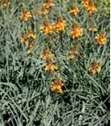 | Where a plant has been used traditionally for a medicinal or therapeutic benefit, it may contain certain substances that provide cosmetic benefits too. For example, plants that have traditionally been used to heal burns or wounds are normally collagen stimulating, which means they may be collagen stimulating for aging skin as well. |
|
Nature with interesting impacts on its surrounding environment 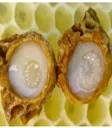 | Some plants or even insects may have an interesting effect on their surrounding environment. This can lead to investigations about what those effects may translate to in other environments, including the skin. |
|
Peptides discovered in animal or plant sources with efficacy in human cell processes  | In this case, the bio-mimicry is not to replace a normal human process but instead uses the discovery of an animal or plant substance that is of benefit to humans. |
|
And then, of course, research may be conducted to find if a plant does not provide anticipated cosmetic benefits at all; but the above 'characteristics' of a plant and its history of use can be the start of new and amazing discoveries. In any case, it certainly starts the research process.
Taking discoveries to the next level
When an extract or constituent of a plant (or insect) has demonstrated an appearance-based benefit, then companies will check safety. This may be done through empirical studies.
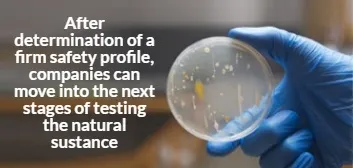
For example, where a substance has known medicinal benefits, any potential side effects or safety issues would also have been identified through empirical use. Safety may also be investigated through in-vitro models (in the first stages).Once a firm safety profile has been determined, companies can then move into the next stages of testing which commonly involve in-vitro studies and / or in-vivo trials.
For an active material to enable cosmeceutical claims it needs to have in-vivo trials conducted showing a visible or appearance-based benefit. Ultimately, this is what all of these actives need to display, and in a competitive way, for an active to be worth commercializing. It is the result of the in-vivo trials to prove visible efficacy that leads to suitable and effective marketing claims.
Commercializing the active

The next step in the process is to produce product in quantities to meet orders in a timely manner. Plants can take time to grow and the extraction process may add to this timeline also. Add in seasonal variations and growing conditions and you have a risky commercialization step! It also takes effort to ensure long term sustainability with crop rotations and the like.
But, we are now seeing more and more actives produced using bio-fermentation. Bio-fermentation enables complete sustainability as well as high purity harvesting of the end product in what is usually, a very short time frame. This helps ensure commercialization of an active that is high quality, sustainable and consistent.
Not all extracts or plant-based actives are produced using bio-fermentation, but an increasing number are for these reasons.
Are all algae extracts same?
There is no doubt that 'blue is the new green'. 'Blue' extracts are those materials obtained from marine sources. There are a multitude of marine-based actives now in the market, and more entering all the time. If you spend even half a minute looking for algae extracts, you'll notice there are a lot of them! So, why are there so many and what exactly is the difference?
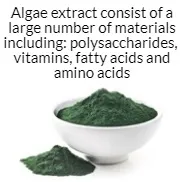
The term 'algae' refers to a huge array of organisms, from single cell microalgae to giant seaweed strains. So, the term 'algae extract' can be correct of a large number of materials. Algae are generally rich in various polysaccharides and vitamins, and may also contain fatty acids and amino acids (depending on the species).
The underwater world is still being discovered with new technologies enabling researches to investigate areas not previously accessible. Finally, marine life is hugely diverse and in many cases, has evolved to adapt to those extreme environments I talked about earlier. Combining all these factors means we have a huge biodiversity of a generally nutrient rich plant-based environment that until recently has been largely under-researched due to access issues, able to withstand extreme conditions.
Discoveries are also largely suited to bio-fermentation. In other words, you have the perfect recipe for new skin care active discoveries! When trying to determine the difference between the 'algae extracts' look for:
- In vivo efficacy data - As mentioned earlier, in vivo results (clinical results) are the ones that provide you with potentially marketable skin care claims. Having an effective active is one thing but having a highly marketable (and compliant) message is what will grab your consumer's attention in the first place and is essential.
- Botanical name - You may also see descriptions such as blue or brown algae, for example, that will help you identify the source.
- Whether it is micro or macro algae
- Extraction process
- Phytonutrients that have been identified as providing the efficacy
These factors will help you differentiate between the different 'algae' available and their true source.
New marine-based actives entering the market
- Lessonia has developed algae biological waters - AQUALGAE. Using its expertise, Lessonia extracted algae waters using an evaporation and condensation process from fresh algae harvested on Brittany's shores. AQUALGAE ingredients are claimed to be 100% derived from algae composition and are available in three forms: AQUALGAE in Palmaria, Himanthalia or Laminaria waters.
- Expanscience Laboratories has launched a biomimetic active ingredient ALGAENIA® derived from microalgae. Microalgae originates from the acid lakes of Patagonian volcanoes and is able to survive in a hostile environment. ALGAENIA® is claimed to provide superior protection to sensitive skin from inflammation and allergens through a softening, moisturizing and soothing action.
- SEPPIC has produced HYDRALIXIR™ range, a collection of plant cellular waters sourced from the marine world. HYDRALIXIR™ algae cellular waters collected in the heart of Laminaria digitata (brown seaweeds) and Chondrus crispus & Gigartina stellate (red seaweeds) sourced in Brittany, France.
- COSMOS has approved DIC Linablue® G1, a natural blue colorant obtained from an edible blue-green alga used primarily as a health food. In addition to its vivid blue color and solubility in water, Linablue® G1 boasts powerful antioxidant and anti-inflammatory properties making it suitable for makeup to skin care products.
- Further, in 2019, Lubrizol and Corbion have collaborated to bring AlgaPūr™ High Stability High Oleic Algae Oil to the personal care and cosmetics markets. AlgaPūr™ is claimed to have superior oxidative stability, offer elegant sensorial experience and promote formulation of mild products.
Your ‘new’ discovery…
If natural actives are important for your brand, then going green or blue is a forgone conclusion! Take a deep breath and plunge into the world of blue actives - you'll soon be drowning in high efficacy, clinically proven active materials for just about every cosmeceutical application. From anti-aging, whitening, skin firming through to anti-oxidant protection, there's an active to suit your organizational needs.
Remember, the marketing story and that in-vivo efficacy data are what will help ensure a highly marketable, high performance product while the natural active, its source and sustainability profile only helps boost your branding and message.
This article was originally published on December 19, 2017 and updated on April 14, 2020.