


How to formulate paints & coatings with good leveling?
Last update on Jan 14, 2026
Leveling is an attribute that significantly determines the aesthetics of a coating or rather the surface of a coating. Optimum leveling performs many functions in a coating as it promotes the quality of spreading of the applied paint layer into a flat, smooth, homogeneous film.
What happens when leveling is poor?
Poor leveling leads to:
- Visual defects such as orange peel effect, craters, fisheyes.
- Reduced hiding power: Poor leveling can lead to patchy coverage, where the underlying surface shows through.
- Weaker adhesion: leads to risk of peeling, flaking, or cracking over time.
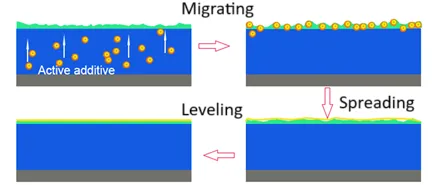
Image credits: Guangzhou Deco Chemical Technologya
Pre-requisites
We are sure you have clarity on possible ways to omit that worsens your leveling. Here is a brief for you to check mark off your list:
- Foaming agents: Foam can make leveling worse as it increases the viscosity.
- Solvents: A less volatile solvent should be preferred to achieve optimum leveling. Faster the solvent evaporates, less time there is for leveling.
- Layer thickness: A thick layer is easy to level.
- 2K reaction: The faster the reaction, faster the viscosity goes up and hinders the leveling.
Formulation strategies
Visible After Login Visible After Login Visible After Login Visible After Login Visible After Login Visible After Login Visible After Login
Visible After Login Visible After Login Visible After Login Visible After Login Visible After Login Visible After Login Visible After Login Visible After Login
Visible After Login Visible After Login Visible After Login Visible After Login Visible After Login Visible After Login Visible After LoginVisible After Login