

The Bright Future of Smart Coatings
Last update on Mar 15, 2018
 'Smart' is more than just a buzz word in thecoatings industry today. The industry is increasingly getting attracted to new, high performance solutions coming in from the research world. They are not just looking for regular alternatives. And this is enabling the continued emergence of a new generation of multi-functional smart coatings.
 An excellent example of commercialization of smart coatings can be seen with Autonomic Materials - the 'Self-Healing Company'. Their product series AmpArmor™ has been providing smart protection to multiple substrates from the time it was commercialized in 2016.
Now, withSolvay co-investing in a $3 million round in Autonomic Materials end of 2017, market penetration of this new technology is sure to witness a big boost! And as a consequence, we'll see more innovative solutions finding their way to the market.
Self-healing is only one of the many smart technologies. In fact, all coatings that dynamically respond (as per their functionality) to changes in their environment, are considered 'smart'. Other technologies include:
- Super-hydrophobic / omniphobic
- Antimicrobial
- Anti-corrosive
- Self-cleaning
- Anti-fogging / de-icing
- Anti-fouling
- Electrochromic
- Self-assembling
- …
That's quite a long list! And, all the exciting research activity is contributing to the rapid growth of 'smart' world.
Ongoing R&D Making Coatings Smarter
Over the last couple of years, we've seen some very interesting developments from the R&D world.
Here's a look at our Top 7:
- Self-healing Graphene-based Tough Coatings - Chinese Harbin Institute of Technology
The Challenge: Combining toughness with Self-healing property
The Solution: Reinforcing polyvinylalcohol (PVA) with nanosheet of graphene oxide
Recently graphene-info reported that the team of scientists at Harbin took inspiration from the human skin epidermis and developed a new self-healing tough material.
- Soft self-healing layer: a mixture of tannic acid and PVA, which form a dynamic hydrogen-bonded network.
- Tough outer layer: PVA layer containing nanosheets of graphene oxide, which gives greater scratch resistance.
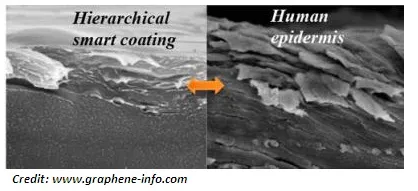
"The more dynamic sublayer provides additional polymers to the top layer, while the top hard layer behaves like a barrier to trap these diffusing polymers," the team says.
On correct integration of the two layers together, the team was able to achieve skin-like hybrid that could self-heal! - Water-repellent Anti-icing Coatings - University of Nebraska-Lincoln
The Challenge: Ice removal from windshields in winters
The Solution: Water-repellent coatings on contact surfaces
Researchers from University of Nebraska-Lincon and Chinese institutions studied the growth of ice on different surfaces. The contact angle (formed where a water droplet meets a solid surface) – determines whether ice will grow along or off the surface.
- Hydrophilic surface allows water to spread across it at a small contact angle
- Hydrophobic surface will force droplets to bead up and form a larger angle
The latter makes ice removal way simpler!
- Gold Nanoparticles Embedded Antimicrobial Coatings – KAUST University
The Challenge: Inhibiting bacterial growth on dental devices
The Solution: Smart polymer coatings that changes color and activates natural antimicrobial enzymes to counter bacterial contamination.
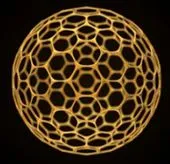 Researchers chose gold nanoparticles that have sensitive optical properties. They tuned it to detect specific biomolecular interactions. The nanoparticles were dispersed in the polymer using nanofillers, which ensures minimum leaching.
This gold-silica complex usually emits glowing, red fluorescent light. When in contact with bacteria the complex gets ripped apart, causing the:
- Fluorescence to switch off (enabling the color change)
- Antibacterial cargo to be released
The researchers say that the process of coatings is simple. They are also looking to improve the technology to enable use in other medical devices. - Self-healing Diamond-like Carbon (DLC) Tribofilms - Argonne National Laboratory
What makes it smart is that it generates itself by breaking down the molecules of the lubricating oil. When the tribofilm is worn away, the catalyst in the coating is re-exposed to the oil. This causes the catalysis to restart and develop new layers of tribofilm.
Credit: Argonne National Laboratory
The process is self-regulating, keeping the film at consistent thickness.
This new tribofilm has the potential to make a big difference in improving the efficiency and durability of engines.
Unlike the coatings used currently, which are expensive and not durable, the new DLC tribofilm can continually renew itself during operation. - Functional (Self-cleaning, Anti-microbial…) Coatings - University of the Basque Country
By modifying the surface properties of paints, the researchers developed different types of functional coatings:
- Self-cleaning: Silicon nanoparticles with an organic coating were sprayed onto acrylic films. This enabled the creation of a super-hydrophobic surface with self-cleaning properties. The nano-particles also offered the side benefit of adding high-level of toughness.
This is being claimed as a relatively cost-effective solution since silicon is not as expensive as other materials. - Anti-microbial: Hydrophobic coatings films displaying phase separation has been developed. PU-siloxane copolymer was used where PU gives the substrate adhesion and siloxane remains on the surface. This makes the surface rougher, restricting the adhesion capacity of microorganisms.
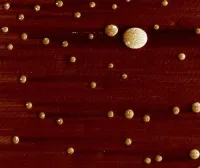 Credit: University of the Basque Country
- Self-cleaning: Silicon nanoparticles with an organic coating were sprayed onto acrylic films. This enabled the creation of a super-hydrophobic surface with self-cleaning properties. The nano-particles also offered the side benefit of adding high-level of toughness.
- Anti-corrosive Graphene-based Coatings
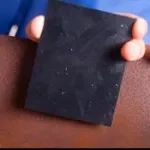
Credit: Iran Institute for
Color Science & Tech- At Iran Institute for Color Science & Tech, graphene oxide nanoparticles have been used in their research to increase protective properties of epoxy-based anti-corrosive coating.
The nanosheets are able to prevent the diffusion of corrosive agents into the coating or to postpone the diffusion for a while due to their very high specific area. - At Institute for Basic Science (IBS), scientists grew graphene on copper by chemical vapor deposition. They further transferred one or two atom-thick layers onto both sides of glass.
This was found to be an ideal solution for protecting glass from corrosion. The scientists believe that this can be used on an industrial scale in future once:
» Larger and yet higher-quality graphene sheets can be developed.
» The process to transfer onto glass can be optimized.
- At Iran Institute for Color Science & Tech, graphene oxide nanoparticles have been used in their research to increase protective properties of epoxy-based anti-corrosive coating.
- Applying Super-hydrophobic Layer using Salt – POSTECH
The research team used a salt-dissolution-assisted etching process to simplify the method of applying super-hydrophobic layer. They exposed a salt-particle-embedded PDMS surface to an aqueous environment.

While the salt readily dissolves, remaining PDMS surface becomes roughened leading to a super-hydrophobic surface.
As exciting as these new developments are
, the reality in terms of the market viability will be of utmost importance.
Let's shift our focus now towards the market dynamics.
Smart Coatings Market – Drivers and Challenges
At the Coatings Trends and Technologies 2016, one of the keynote speakers was Lawrence Gasman from n-tech Research. He shared some valuable insights into the factors driving (and also impeding) smart coatings market.
Have a look:
| Drivers | Impediments |
| 'Smart' is a positive marketing message (akin to 'Sustainable') | Concerns about scalability in manufacturing |
| Nanotechnology is making smart coatings 'smarter' | Use of exotic materials |
| Chemical firms are more and more attracted to new, high performance solutions and not just regular alternatives. | Not many big players into it full time yet |
| Performance lags (need – longer lifespan, high performance) |
To get ahead with smart coatings, it is important to understand the current development and business opportunities. Map new development opportunities for your functional coatings by reviewing Smart Coatings trends in our exclusive innovation round-up. The new materials, latest commercial launches, promising concepts, & innovations can be a game-changer for you as well, if you act quick. Join today!

Coatings’ Smart Future – A peek into 2021
Following are some very interesting figures that give us a peek into the technologies that have the most market potential and end-user markets that would dominate the use of smart coatings.
Smart Coatings: Major Product Classes - 2021
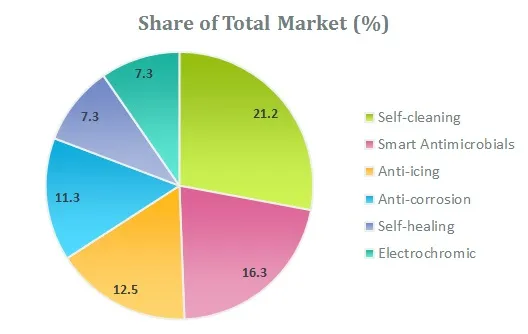
Self-cleaning coatings is projected to have the maximum market share in 2021
Credit: n-tech Research
Smart Coatings Markets by End-user Sector - 2021
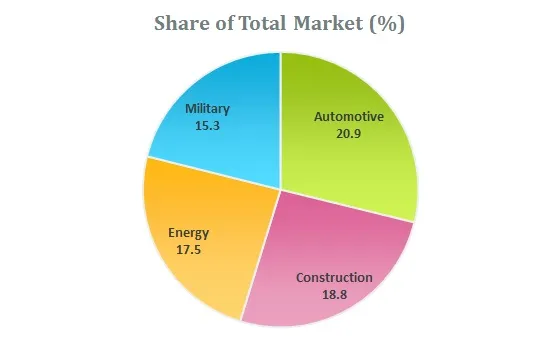
Automotive market is expected to dominate the use of smart coatings the most in 2021
Credit: n-tech Research
Key Players to watch out for
| Company | Value |
| Autonomic Materials |
|
| BASF/AkzoNobel |
|
| PPG |
|
| 3M |
|
| Dow – DuPont Specialty Products |
|
| Other start-ups like SLIPS Technologies that bring solutions from labs to market |
|
This article was first published on January 27, 2017 and was revised on March 15, 2018