

A Success Story of Predictive Formulation with Science-based Apps
Last update on Mar 2, 2021
An Interview with Prof. Steven Abbott, Director of Steven Abbott TCNF Ltd. & Part of The HSPiP Team
Science-based Formulation
 Formulators are constantly looking for methods or tools to optimize complex products across a large chemical space, which is getting too large for conventional tools such as design of experiment or brute force high throughput. are in a sweet spot that can readily capture the chemical nature of the various components and work out how to make them more or less compatible as required.
 By narrowing down the options in chemical space, it is faster and cheaper to reach reasonable formulations which can then be further optimized via conventional approaches. HSP does this via numbers that allow you to compare, contrast and test out 'what if' scenarios. Importantly, HSP are comfortable with multiple components with the trade-offs and opportunities (e.g. smart solvent blends) that they represent.
His Contribution to Practical Science
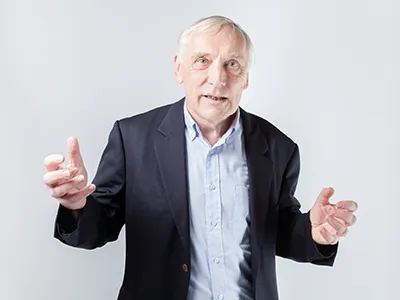
Professor Steven Abbott is one of the 3-person team behind the HSPiP software to bring HSP to the large-scale formulation community. He is a Science Trainer and Consultant, a Programmer and Author who aims to spread useful and practical science around the world.
He has written several books and developed scientific apps on a wide range of topics, such as Solubility, Surfactants, Rheology, Printing, Nanocoatings, IGC, Adhesion and Particle science, where the science is brought to life via apps. Most of his written books are available as free eBooks which have been downloaded 10's of 1000s of times. With SpecialChem and VLCI, he has spent recent years promoting Science-Based Formulation, initially via HSP but in the future he aims to further promote the practical science via other techniques, such as HLD-NAC for surfactants as well.
On the occasion of his 70th birthday, we are thrilled to interview Professor Steven Abbott to learn more about his success story to practical formulation science and how science-based tools simplify the formulation space.
Let's begin...
#1 We are so glad to have this opportunity of talking about you and your work today. How does it feel?
SA: Wow! A birthday interview! I'm honored, and happy for the chance to reflect on two core themes of my scientific life.
- First, I've been lucky to have learned from many amazing and generous scientists, so I have a passion to give back to the community.
- Second, perfect theories are unlikely to appear anytime soon, and 'instinct' is usually unreliable so the aim is to find the best-available usable theory to guide me and others to practical solutions to complex problems.
#2 How do you see the evolution of digital tools in the chemicals industry?
SA: A lot of companies jumped onto the bandwagon of 'digitalization' assuming that they just needed 'big data' and 'AI' combined with high throughput and . That was the hype phase. Then disillusion set in because chemical space is too large for such an approach to work.
Increasingly we are seeing companies in a new phase, identifying the core bits of science in, say, solubility, solubilization, surfactants, particles, polymers. These core ideas can be used fruitfully as standalone predictive tools or as ways to narrow down the space explored by high throughput systems, then to get to a smaller space where DoE is so effective.
Tools like HSP, HLD-NAC, Scheutjens-Fleer, critical entanglement are never perfect, but by guiding the digital process they provide a lot of power.
#3 When and how did you get introduced to HSP?
SA: I met Charles Hansen over a business dinner in Denmark and almost immediately he told me that I was totally wrong on a certain topic and explained why I was wrong. I was so impressed that I decided to explore HSP for my formulation work.
Some months later we had a crisis in production and when I tried to apply HSP (badly) the results made no sense. I emailed Charles and within an hour was told (very politely) that I was an idiot because I'd not done things properly. His correct calculation immediately solved the problem. That's when I got hooked.
Professor Steven Abbott Explains What Hansen Solubility Parameters are and How They Should Become a Go-to Tool for Science-based Formulation
#4 What is something that the formulators of today lack knowledge of? How can HSP benefit them?
SA: That's a trick question – it implies that things were better in the good old days. They weren't. I think that there's a general problem that any formulator looking at the literature finds either simple tools that don't work, or academic papers that are impossible to put into practice. So they get discouraged from even bothering to find solutions other than via intuition and experience.
What HSP and other similar theories can do is provide 'good enough' 'popular science' book on adhesion I was delighted. This allowed me to describe what's really going on over a wide range of adhesion issues – Neanderthal arrowheads, geckos, superglue, adhesive tapes, 3D printing, sticking humans together.
It is far harder to write popular science, especially as I refused to dumb down the message. Although (I'm happy to say) the books are proving popular with many readers who have a 'general science' interest (and who want to solve real adhesion issues at home!), I'm also finding that many readers from the adhesion community are learning to see and are sharing their copy with colleagues who might need reminding, for example, that adhesion is a property of the system.
#9 Please tell us about your collaboration with SpecialChem to widen the reach of HSP?
SA: Although I have a large web presence my reach can never be as large and effective as an organization whose mission is to bring formulation knowledge to the widest possible community. So it was a thrill when the idea emerged of SpecialChem, myself and VLCI combining our respective skills to take the first big step in the science-based formulation by bringing HSP systematically to the wide community. Right from the start, the plan was to combine two elements:
- A huge dataset of HSP values of all the (relevant) chemicals on SpecialChem, and
- A set of tutorials on the theory and practice behind HSP.
This was a large mutual commitment of resources but it quickly became apparent that it was fulfilling a real need. And, what was especially pleasing to me personally was the delight from Charles Hansen in the fact that something he started in a Ph.D. thesis more than 50 years ago is now available to everyone on a global scale.
   |
About Professor Steven Abbott
Professor Steven Abbott received his Oxford Ph.D. in chemistry from Harvard before a post-doc with Nobel Prize winner Jean-Marie Lehn. He spent 30 years in the industry, first with the large UK chemical company ICI then as Research Director of a high-tech coatings company near Oxford. Because he always sought out good-enough theories he worked closely with academia, especially U Leeds in the UK, and became a Visiting Professor there.
In 2009, he became independent giving himself a chance to write the 350+ free apps on his Practical Science website, become one of the 3-person team behind the HSPiP package of software, eBook and datasets, and to write books on Solubility, Surfactants, Rheology, Printing, Nanocoatings, IGC, Adhesion, and Particle science, most of which are free eBooks which have been downloaded 10's of 1000s of times. He troubleshoots problems for companies around the world and is frequently asked to run on-line seminars that use his apps live to illustrate the key scientific points.
With SpecialChem and VLCI, he has spent recent years promoting Science-Based Formulation, initially via HSP but in the future via other techniques such as HLD-NAC for surfactants. He continues to actively publish scientific papers, in recent years focusing on the science of solubilization.
 View All Publications from Prof. Steven Abbott
About Steven Abbott TCNF Ltd.
His one-man company TCNF, got its title from Technical software, Coating/Printing, Nanostructures and Formulation, a brief description of his broad interests when he started the company. It turns out that this combination is in demand from companies around the world who face difficult technical challenges that span a variety of disciplines and often require custom computational models combined with scientific analysis. Smaller companies, especially startups, are often helped at no charge – another way of giving back to the scientific community.
Easily Find Compatible Products Based on HSP Distance
Ease your selection of Compatible Ingredients using exclusive HSP tool in our database.Start exploring this tool today!
Don't know how? Let's us help you with that:
- Select any product from the list
- Locate the 'Compatible products' box, below product information and properties. If you're on desktop, you'll also see one in the right column
- Click on the 'compatible products' button to see matching products
- Use other filters to finetune your search