

Waterborne two-component polyurethanes for wood and metal coatings
Last update on Sep 3, 2025
Actually, there are many alternatives to classical solventborne systems. They are based on waterborne and/or hydrophilic products and are used in wood coatings1, plastic coatings for OEM interior2 and some general industrial applications for metal3. The decision whether to use a solvent- or waterborne system does not only depend on legislation but is influenced by public opinion as well.
Find out how to improve the physical properties of waterborne two-component polyurethanes for wood and metal coatings.
| We would like to acknowledge the team of Rhodia Syntech for providing technical assistance with this article. |
Additives for two-component PU systems
Prepolymers for 2K PU systems
There are two main types of polyisocyanates used as hardeners for two-component polyurethane systems, namely:
- HDI (hexamethylene diisocyanate): HDI is a chain of CH2 groups, which can rotate around the axis of the molecule, resulting in a flexible product. The homopolymer has a glass transition temperature of 63°C.
- IPDI (isophorone diisocyanate): Its cycloaliphatic structure, represents a more rigid form. This results in a glass transition temperature of 105°C for the homopolymer.

Figure 1: Molecular structure of HDI (hexamethylene diisocyanate) (R) and IPDI (isophorone diisocyanate) (L)
When we compare both monomers, differences in their final behavior become evident. Looking at the standard prepolymer products, we see that the HDI-trimer is a liquid with a viscosity of 600 to 2400 mPa.s at room temperature, whereas the IPDI-trimer is a solid, which is commonly supplied as a solution of 70% solids content in different solvents.
Transitioning from hydrophobic to hydrophilic
The above-mentioned isocyanates are hydrophobic in nature. It is possible to increase their water friendliness by rendering them hydrophilic with the help of emulsifiers or emulsifying structures4.
The difference between both techniques lies in the loss of certain amounts of isocyanate groups when grafted emulsifiers are used, whereas physical mixtures with emulsifiers leave the basic isocyanate unchanged. Due to the fact that the isocyanate hardener in most formulations acts like an additive resin (< 50% based on solids), it may be possible to use pure hydrophobic isocyanates in waterborne formulations. The critical point is how to find out the optimum hydrophilicity for the hardener in a given system.
Choosing the type of solvents
Although water is a very important solvent, this medium is not an appropriate solvent for the hardener, and in most cases not even for the resin in the A-component. In order to adapt the hardener viscosity to the viscosity of the formulated A-component, organic solvents that do not react with the isocyanate group are required.
These solvents can not only contribute to decreasing viscosity but will also help the hardener be well-emulsified into small droplets5 in the A-component after mixing. It will also improve the film-forming process after application on the substrate. For final film properties, the solvent helps produce higher gloss and improves hardness as well as chemical resistance.
Metal coatings: Improving drying time and film hardness
A given clearcoat formulation for metal coatings can only be used for oven drying at temperatures above 140°C. By reformulating the hardener, we tried to improve drying properties (Table 1).
Ingredient | Use Level | Formulation | Standard | Hardener 1 |
| Acrylic polyol | 40.00 | Hydrophilic HDI trimer | 75.0 | 52.50 |
| Rheological additive | 0.54 | IPDI trimer 70% | - | 32.20 |
| Antifoam | 0.20 | Butyl acetate | 5.3 | 5.30 |
| Wetting agent | 1.32 | BGA | 1.7 | 1.70 |
| Wetting agent | 0.13 | MPA | 9.0 | 4.15 |
| Slip agent | 0.13 | Xylene | 9.0 | 4.15 |
| Demineralized water | 28.80 | Total | 100.0 | 100.0 |
| Acrylic polyol | 23.83 | |||
| Demineralized water | 5.05 | |||
| Total | 100.0 |
Table 1: Formulation of a metal coating with two different hardeners
Due to the cycloaliphatic structure of the added IPDI-trimer, better physical drying properties are expected. We maintained the solvents of the hardener dilution and examined the behavior during hardener introduction into the A-component. On a random ranking from 0 to 5, where 0 means that the hardener could not be introduced and 5 signifies that the mixing is as easy as with a solventborne system, both hardeners were on the same level (Figure 2).
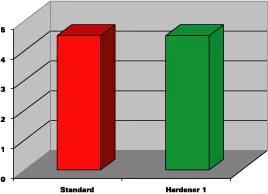
Figure 2: Hardener introduction of a system for metal coating
The aim of this investigation was to improve drying properties and to show the possibilities that hardener modification may bring. At room temperature, drying time could be reduced from more than 8 hours down to 6.5 hours (Figure 3).
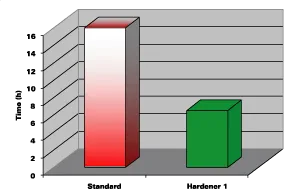
Figure 3: Drying time of a system for metal coating
The impact of isophorone diisocyanate trimer will also become evident when we look at the final hardness of the fully cured films (Figure 4). The difference of roughly 40 Knig seconds can be explained as a result of the hardener modification.
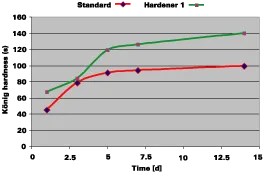
Figure 4: Hardness development of a system for metal coating
Properties like gloss and pot-life were the same as the standard hardener.
Wood coatings: Focus on film aspect and chemical resistance
Waterborne 2K PU wood coatings for parquetry are by now well established in the market. Although their relatively high solvent content in the formulations is still a concern. In a given example (Table 2), by adapting the formulation of the A-component to the hardener it is possible to avoid the use of a solvent for pre-diluting the hardener.
Ingredient | Use Level | Formulation | Standard | Hardener 1 |
| PUD | 30.0 | Hydrophilic HDI trimer | 70.0 | 33.3 |
| Antifoam | 0.50 | Hydrophobic HDI trimer | - | 66.7 |
| Wetting agent | 0.25 | Polypropylene carbonate | 30.0 | - |
| Matting agent | 1.00 | Total | 100 | 100 |
| DOWANOL DPM | 2.50 | |||
| DOWANOL DPNB | 2.50 | |||
| Demineralized water | 15.70 | |||
| Antifoam | 1.20 | |||
| PUD | 40.60 | |||
| Rheological modifier | 1.00 | |||
| Demineralized water | 2.75 | |||
| Wax dispersion | 2.00 | |||
| Total | 100 |
Table 2: Formulation of wood coatings with different hardeners
The difference in isocyanate content of both hardeners was adjusted by different mixing ratios. The standard was mixed with the A-component in a ratio of 100:10, and Hardener 1 in a ratio 100:7.5. There still is a slight excess of isocyanate groups in Hardener 1. This results in a decrease in volatile organic compounds (VOCs) of 48 g/l.
An important point for the final user is the introduction of the hardener into the A-component. It is essential that the waterborne system behave as closely as possible as a solventborne system.
- Often the hardener is introduced by just pouring it into the A-component, closing the can and shaking it.
- Another possibility is to stir it in manually with a wooden stick after the hardener has been added into the A-component.
Indispensable prerequisites are ease of mixing, no large viscosity increases, and no coagulate formation (Figure 5).
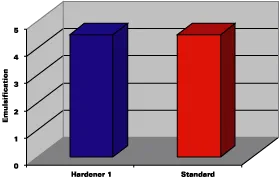
Figure 5: Hardener introduction of a system for wood coating
With a rating of 4.5, there is no difference between the two hardeners when mixed with the A-component. Another important factor to consider is the film aspect after application (Figure 6).
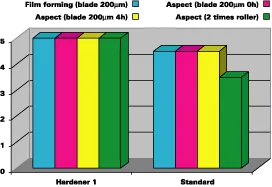
Figure 6: Film aspects of a system for wood coating
In films applied with a blade (200m wet film thickness), examination of the aspect of the films produced after zero hours and four hours of pot-aging shows advantages for the new Hardener 1. After film application by roller, the results obtained with Hardener 1 were also better. This is due to the adaptation of the A-component to the hardener (in this case, of Hardener 1).
As far as chemical resistance is concerned, the new Hardener 1 also has an advantage (Figure 7). This could easily be explained by the excess of isocyanate in Hardener 1 compared to the standard. Other properties like pot-life and hardness development did not show many differences between both hardeners.
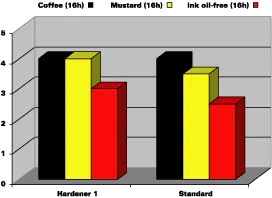
Figure 7: Chemical resistance (DIN 68861 Part B) of the system for wood coating
Conclusion
By adapting the formulation of the paint, either the hardener or the A-component properties of the system can be improved. In a given formulation for metal coatings, the drying time could be reduced significantly, whereas all other properties were kept on the same level. If the A-component is adapted to the hardener and the hardener is re-formulated, use of a solvent for pre-diluting the hardener can be avoided completely. This will result in significant improvements in VOC content.
- Wagner, A. Praxis-Forum 2K Lackierung von Metall, Kunststoff & Holz 4/96, S. 215.
- Hansemann, W. Praxis-Forum, 2K Lackierung von Metall, Kunststoff & Holz 4/96 S. 71.
- Schwan, Dr. H. Praxis-Forum, 2K Lackierung von Metall und Kunststoff 2/95, S. 179.
- Schwob, Dr. J.- M. ECC, Polyurethanes for High Performance Coatings 01/99 Berlin, S. 119.
- Internal investigation, not yet published