

Achieve talc-free paint formulations with Omya's mineral solutions automated with AI
Last update on Aug 21, 2025
An interview with Jack van Leeuwen, Director of Technical Service for Construction at Omya
The coatings industry is entering a transformative phase as regulatory frameworks tighten around raw materials. With the proposed classification of talc as a carcinogen (Category 1B, H350) in July 2024, paint manufacturers face significant challenges in maintaining compliance with European Ecolabels criteria. These restrictions create an urgent need for sustainable, high-performance alternatives in paint formulations.
Omya shares how its expertise in minerals and advanced technical services is helping paint manufacturers overcome these hurdles. By offering a portfolio of calcium carbonate, dolomite, mica, and clay, supported by AI-driven high-throughput experimentation, Omya provides tailored solutions to replace talc effectively and sustainably.
We interviewed Jack van Leeuwen, Director of Technical Service for Construction at Omya. He explains the company’s mineral-based alternatives to talc. He highlights how its High Throughput Experimentation platform and AI technologies are driving formulation development. He also discusses Omya’s role in advancing sustainable solutions amid regulatory shifts.
#1. What is Omya’s position in the market for talc alternatives?
Omya as a leader in minerals for paint and coatings can offer alternative solutions to avoid the use of talc in paint formulations.
As of July 2024, talc has proposed to be classified as carcinogen (Category 1B, H 350 meaning it may cause cancer). This classification might significantly impact products intended for commercialization in Europe, as they must comply with the European Ecolabels criteria, which restrict substances which are assigned hazardous classifications.
#2. How is Omya unique and why can Omya find solutions for the affected paint manufactures?
Talc is historically a familiar mineral to Omya. As a former supplier, there is a wealth of knowledge surrounding the use of talc. In addition to being a global producer of calcium carbonate and dolomite, Omya is also a distributor of mica and clay. Depending on the properties, Omya's technical service can help find the right mixture to replace talc.

Omya mineral alternatives of different particle sizes and morphologies
#3. What are the most critical challenges customers are facing nowadays and how your innovative solutions are helping them?
The price-performance ratio for talc is relatively good, and due to its functional properties, a one-to-one replacement is usually not possible, but Omya can provide paint manufacturers with valuable guidance. I firmly believe that this will strongly support paint manufacturers in their intensive efforts to develop new solutions that are both technically effective and economically viable.
#4. What are the current and future market trends / shifts and how Omya is leading them?
The trend toward sustainable and environmentally friendly raw materials continues. The pressure for sustainable and durable paints will increase, and the supply of raw materials which will not comply with this need will decline due to regulations. This will pose significant challenges to the raw materials industry and paint manufacturers in the coming years, unless they do not come prepared.
At the European Coatings Show of this year, Omya presented its solutions in our talk “Let's talk about talc” and on our booth we showcased the power of Omya as solution provider, thanks to its international net of distributing solutions and the Flexshuttle, its highly automatized High Throughput Experimentation (HTE or Flexshuttle) which is now pioneering AI.
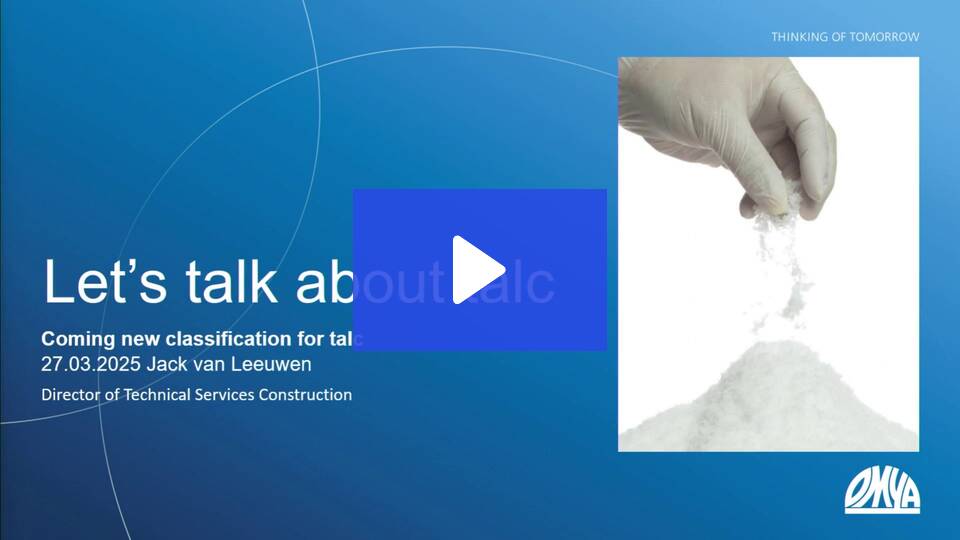
Watch tech video: Replacing talc in coatings: Practical solutions for future formulations
#5. Can you further detail the possible solutions across industries and your contribution?
Collaboration between raw material manufacturers and paint manufacturers will and must increase. The workload will not decrease, and we will have a lack skilled labor in the laboratories. In addition to good collaboration, automation combined with artificial intelligence will be necessary to find solutions such as replacing certain raw materials like talc.
Watch this video: Omya Lab’s Flexshuttle automated formulation lab
 About Jack van Leeuwen
Jack van Leeuwen is Director of Technical Service for Construction at Omya. With 40 years of experience in the Construction and Coating Industry. He has extensive industry knowledge, from nanocoatings to EIFS systems, from both a technical and economic perspective. |
DISCLAIMER: All figures and videos used in this article are copyright of Omya.