

Susterra® Propanediol – Transforming Coatings Industry with 100% Bio-Based Solution
Last update on Aug 7, 2024
This is a sponsored article by Covation Bio|PDO.
In the coatings industry, the shift towards sustainable and high-performance materials is more critical than ever. As environmental concerns grow and regulations tighten, manufacturers are seeking eco-friendly alternatives. They do not compromise on quality and reduce GHG.
Susterra® 1,3-Propanediol (PDO) is a 100% bio-based solution that meets these demands.
In this article, let's delve into the role of Susterra® PDO in various coating formulations. We will also showcase its environmental advantages and great performance when compared to traditional petroleum-based materials.
The Need to Shift from Conventional to Sustainable Solutions
The coatings industry has long relied on petroleum-based glycols and diols. They pose significant environmental challenges. These conventional materials contribute to ecological degradation. They are derived from non-renewable resources that impact the ecosystem and global warming.
The demand for sustainable products is rising. This is because consumers have become more aware of these issues. As a result, they increasingly support eco-friendly initiatives. In response, coating manufacturers are actively planning a transition to sustainable alternatives.
Renewable feedstocks – The solution
Renewable feedstocks offer a promising solution. By using plant-based materials, the industry can reduce its carbon footprint without compromising on quality.
First-generation feedstocks
First-generation feedstocks, such as corn, are preferred due to their efficiency and availability. These crops provide a consistent supply of sugars necessary for biomaterial production through fermentation technology.
Second-generation feedstocks
Second-generation feedstocks, like agricultural residues and woody crops, require complex processing to extract sugars, adding cost and variability. For instance, dent field corn is a prime example of an effective first-generation feedstock. It produces substantial yields in large quantities with stable land use. The production of dent corn has been increasing year after year, as shown in the graph below. This consistent growth with no negative impact on land use makes it ideal for producing renewable chemicals used in sustainable coatings.

Figure 1: U.S. Field Corn Yield over Time from 1975 to 2018 (Source: ProExporter Network)
Shifting from petroleum-based to bio-based chemicals is not just environmentally beneficial but also maintains product performance.
Susterra®: 100% Bio-based 1,3-Propanediol (PDO)
1,3-Propanediol (PDO) significantly enhances the performance of coatings based on PUD resins. Coatings formulated with PDO exhibit very good resistance and flexibility. These benefits are achieved without compromising other essential properties. Key attributes that remain consistent across various concentrations of PDO include:
- Hardness
- Adhesion, and
- Chemical resistance

Figure 2: Susterra® Propanediol Molecular Structure
Production of Susterra®
Susterra® 1,3-propanediol is a petroleum-free derived glycol developed by former DuPont Tate & Lyle joint venture which is operating today as Primient Covation LLC JV. Also known as Bio-PDO, it is produced from 100% renewable and sustainable resources through a meticulous process involving three key steps:
- Harvesting: Renewably sourced corn feedstocks are harvested, dried, and wet-milled to create carbohydrate-rich feedstocks like glucose.
- Fermentation: The glucose is then converted into 1,3-propanediol using a patented microorganism under specific temperature and conditions.
- Refining: The 1,3-propanediol is further refined to a purity of a minimum of 99.7% by removing the microorganism, water, and other byproducts.
Key physical and chemical properties
The physical and chemical properties of Susterra® 1,3-Propanediol are listed below.
Property | Value | Property | Value |
CAS Number | 504-63-2 | Vapor Pressure @ 25°C (hPa) | 0.0267 (0.0200) |
Molecular Formula | C3H8O2 | Vapor Pressure @ 100°C (hPa) | 8.77 |
Molecular Weight | 76.1 | Specific Gravity @ 20°C | 1.053 |
Hydroxyl Value | 1475 | Water Solubility | Infinite |
Melting Point (°C) | -27.65 | log Know | -1.04 |
Boiling Point (°C) | 214.22 | Auto-ignition Temperature (°C) | 400 |
Freezing Point (°C) | -24.0 | Viscosity, Kinematic @ 20°C (cSt) | 46 |
Refractive Index (20°C) | 1.436 | Viscosity, Dynamic @ 20°C (cP) | 49 |
Lower Explosion Limit (% vol) | 2.6 | Certifications | GRAS, Halal, Kosher |
Vapor Pressure @ 20°C (hPa) | 0.0159 | ||
Table 1: Physical and Chemical Properties of Susterra® 1,3-Propanediol
Advantages of using a 100% bio-based glycol
Susterra® PDO reduces greenhouse gas emissions by up to 86%. This is compared to traditional petroleum-based propanediol, propylene glycol (PG), and 1,4-butanediol (BDO), as shown in Fig 3.
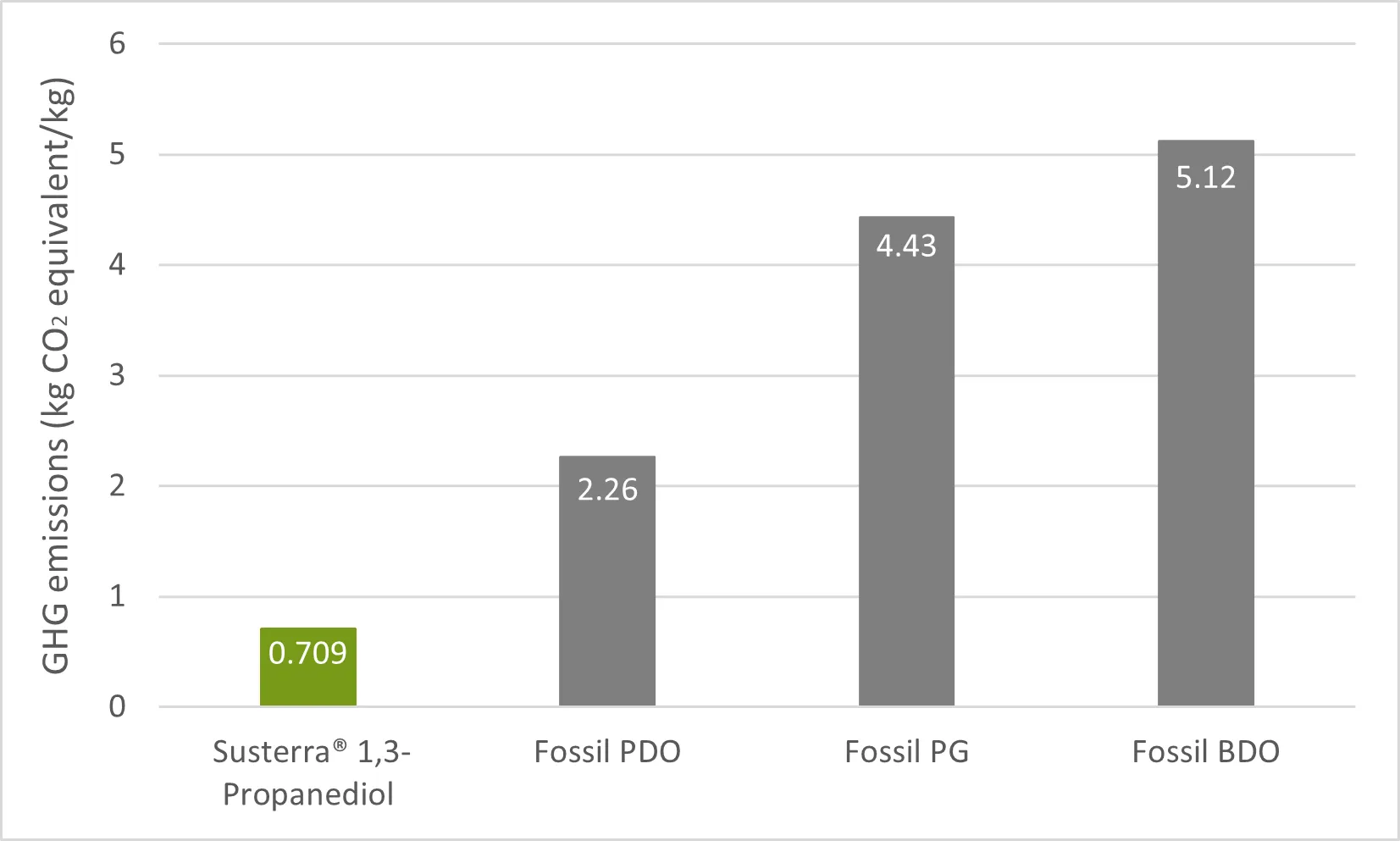
Figure 3: Susterra® Propanediol Comparison with Conventional Propanediol and 1,4-butanediol (BDO)
Greenhouse gas emissions: Susterra® compared to Fossil BDO: 86% reduction
Susterra® compared to Fossil PG: 84% reduction
Susterra® compared to Fossil PDO: 69% reduction
This makes Susterra® a sustainable choice but also an eco-friendlier alternative for coating manufacturers.
Potential Usage of Susterra® PDO in the Coatings Industry
Susterra® PDO is widely utilized across various industrial applications. It plays a significant role in the manufacturing of coatings, inks, and adhesives, where it enhances cohesion properties. Additionally, it serves as a performance polymer in sectors such as footwear, outdoor apparel, and performance gear. Susterra® PDO is also used as a functional fluid in heat transfer and engine coolant applications.

Figure 4: Susterra® PDO Applications in Coating Industries
In the coatings industry, Susterra® PDO stands out due to its multifunctional capabilities. It can be employed as a monomer, chain extender, and bio-solvent, providing various formulation advantages. It can be polymerized to form polytrimethylene ether glycol (PO3G), a 100% bio-based polyether polyol. This compound is highly valuable in creating sustainable and high-performance resin systems for coatings.
PU Coatings - Liquid PU DTM Coatings
Susterra® PDO significantly enhances the properties of liquid PU direct-to-metal (DTM) coatings.
When used as a polyester/polyether polyol it:
| When used as a chain extender it enhances:
|
Test results as shown in Fig 5, demonstrate the superiority of Susterra® PDO-based polyols. The PO3G (polytrimethylene ether glycol) outperforms PDO-Sebacate and PDO-Adipate polyols in key performance metrics.

Moreover, the UV-aging tests reveal that coatings with WPU-PO3G (water-based polyurethane with polytrimethylene ether glycol) exhibit exceptional color retention. These coatings outperform those made with other renewable sourced and petroleum-based polyols while maintaining color integrity over extended exposure to UV light. Susterra® PDO also enhances abrasion resistance when used in the artificial leather skin coat layer.

Key benefits of Susterra® PDO in PUDs
Polyurethane dispersions (PUDs) formulated with Susterra®-based polyether and polyester polyols exhibit great characteristics which might vary based on the formulation:
- Increased stain and chemical resistance
- High thermal stability
- Improved flexibility
- Reduced viscosity
- Good scratch and abrasion resistance
- Excellent adhesion properties
- Superior hydrolytic aging properties
These benefits make Susterra® PDO an ideal choice for coating manufacturers who are looking for eco-friendly alternatives to enhance the performance of their liquid PU DTM coatings while supporting global sustainability goals.

Powder Coatings - Hybrid epoxy polyester powder coatings
Testing Susterra® PDO as a replacement for 2 glycols in use simplifying the formulation
Susterra® PDO has been evaluated as a replacement for ethylene glycol (EG) and hexanediol in hybrid epoxy polyester powder coatings. This approach aims to create more sustainable and environmentally friendly formulations for indoor applications, particularly appliances and white goods.
Test parameters
Binder | Reactor (L) | Azeotrope Content (%) | Inert Gas | Rotational Speed (rpm) | Reaction Temperature Phase I (°C) | Reaction Temperature Phase II (°C) | Reaction Time (h) |
PDO | 1 | MIBK - 2% | Nitrogen | 200 | 240 | 230 | 12.5 |
PDO R1 | 12.5 | ||||||
Standard | 11.5 | ||||||
Standard R1 | 12 |
Targeted Parameters | Acid Value | Hydroxyl value | Viscosity @ 200°C | Tg, DSC |
70 | <5 | 1.1 | 50 |
Binder | Acid Value Theory (mgKOH/g) | Est. H2O Theory | Est. H2O Experimental | Eb/Ea - R | Catalyst/Binder (%) | F | Raw Material Amount (g) |
PDO | 52.1 | 156 | 147 | 1.11 | MBTO - 0.15% | >2 | 1185.9 |
PDO R1 | 52.1 | 156 | 148 | 1185.9 | |||
Standard | 51 | 151 | 150 | 1182.5 | |||
Standard R1 | 51 | 151 | 146 | 1182.5 |
The tests revealed that coatings incorporating 13% Susterra® PDO exhibited properties almost identical, sometimes better, to standard hybrid powder coats.
Gloss retention analysis
Gloss retention was tested over time, and results showed that the PDO-based coatings maintained their gloss equally to better in the long term compared to their conventional counterparts.
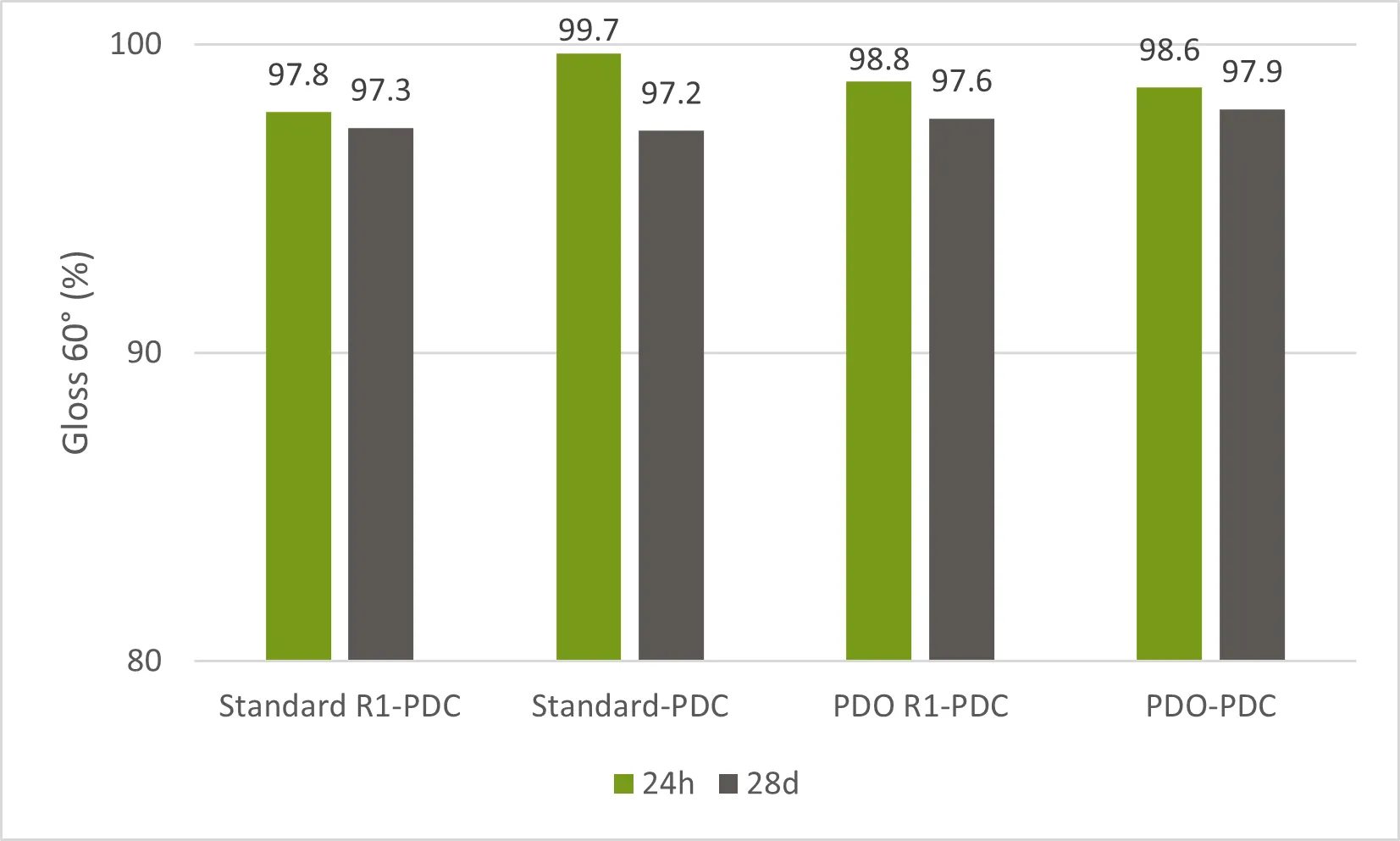
Figure 7: Gloss Retention Analysis – 24 hours and 28 days
Yellowing analysis
The PDO-based coating also showed a slight improvement in resistance to dark yellowing compared to standard formulations that ensure better aesthetic longevity.
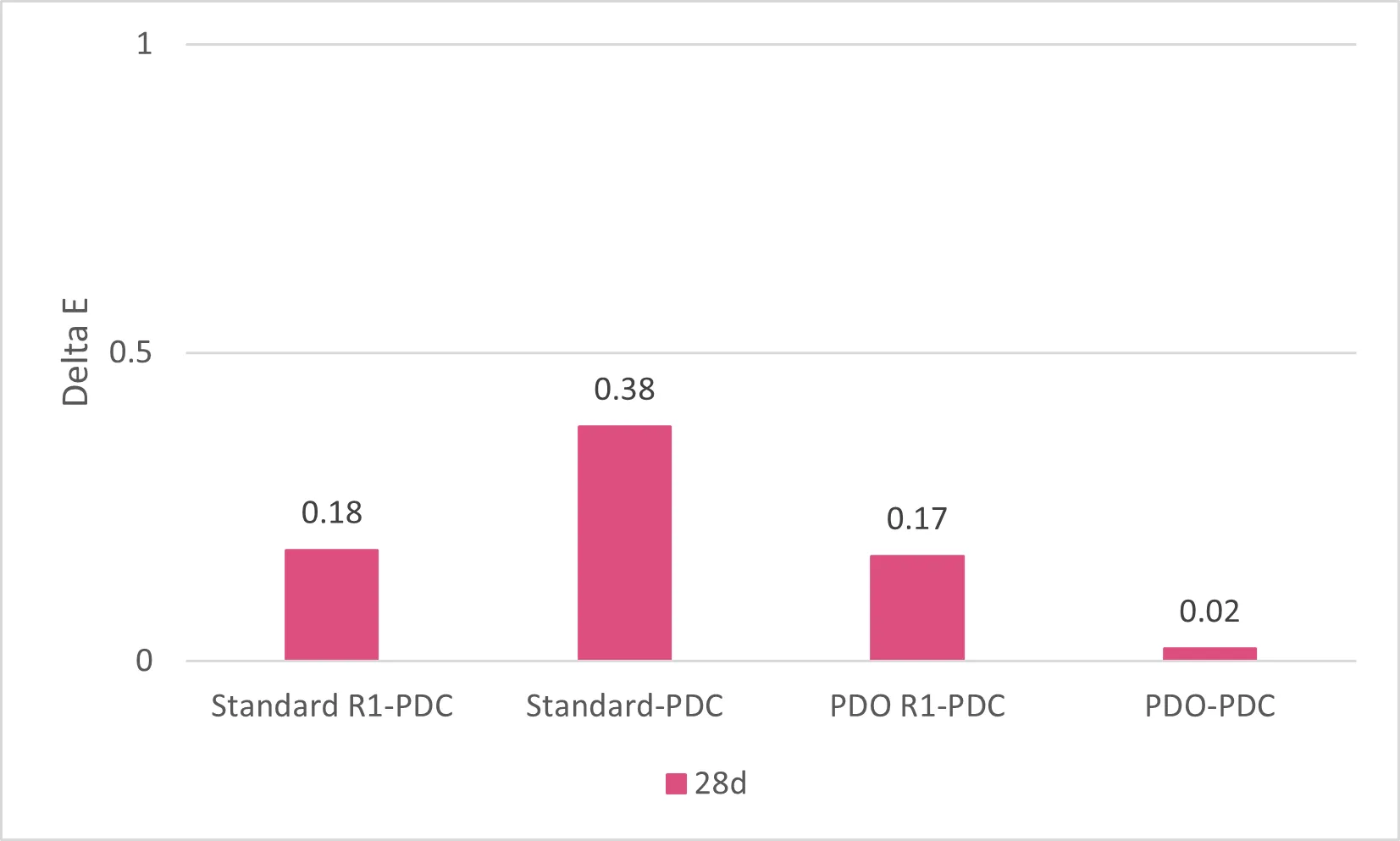
Figure 8: Yellowing Analysis – 28 days
Susterra® PDO – A better choice for powder coating manufacturers
We found that replacing ethylene glycol (EG) and hexanediol in hybrid epoxy polyester powder coatings with bio-based PDO (Susterra® PDO) maintains the coating's properties. Moreover, it offers a somewhat better resistance to yellowing in the dark and great gloss retention.
Given these benefits, why not switch to the more sustainable, eco-friendly alternative?
By adopting Susterra® PDO, manufacturers can enhance product performance, support environmental sustainability, and align with industry trends towards greener practices.

Using Susterra® PDO as a bio-solvent in architectural coatings
Susterra® 1,3-propanediol (PDO) can be effectively used as a bio-solvent for waterborne air-drying (architectural) coatings. This involves replacing traditional petroleum-based solvents like mono propylene glycol (PG) and butyl glycol (BG) in acrylic and polyurethane resin systems with 100% bio-based Susterra® PDO. The transition to Susterra® PDO aims to enhance the sustainability of coating formulations without compromising their performance.
Test formulations and parameters
Two test formulations were conducted to evaluate the performance of Susterra® PDO in acrylic and polyurethane coatings.
In the acrylic coating formulation, both full and partial replacements of PG and BG were tested.
The results indicated that replacing PG with Susterra® PDO maintained the minimum film formation temperature (MFFT), showing no negative impact on film formation. However, replacing BG with PDO increased the MFFT, which suggests a limitation in using PDO as a complete replacement for BG.
PA-1 PA-2 PA-3 PA-4 PA-5 PA-6 PA-7 PA-8 PA-9 PA-10 DI-water 11.23 21.23 17.23 15.23 11.23 11.48 11.73 11.98 12.23 15.23 BYK® -028 1.16 1.16 1.16 1.16 1.16 1.16 1.16 1.16 1.16 1.16 AMP 90 0.02 0.02 0.02 0.02 0.02 0.02 0.02 0.02 0.02 0.02 EDAPLAN® 516 0.2 0.2 0.2 0.2 0.2 0.2 0.2 0.2 0.2 0.2 AEROSIL® 200 0.21 0.21 0.21 0.21 0.21 0.21 0.21 0.21 0.21 0.21 Kronos® 2160 21 21 21 21 21 21 21 21 21 21 PLEXTOL™ D 2610 25.13 25.13 25.13 25.13 25.13 25.13 25.13 25.13 25.13 25.13 PLEXTOL™
A 660425.13 25.13 25.13 25.13 25.13 25.13 25.13 25.13 25.13 25.13 BYK® -346 0.98 0.98 0.98 0.98 0.98 0.98 0.98 0.98 0.98 0.98 Propyleneglycol (PG ) 6 0 0 6 0 0 0 0 0 0 Che Coat CI LNF A4 1.95 1.95 1.95 1.95 1.95 1.95 1.95 1.95 1.95 1.95 Butylglycol (BG ) 3 0 3 0 3 2.25 1.5 0.75 0 0 +DI-H2O 3:1, pH 8.5 1 0 1 0 1 0.75 0.5 0.25 0 0 Bio PDO 0 0 0 0 6 6.75 7.5 8.25 9 6 TAFIGEL® PUR 61 with Dl-water (1:1) 3 3 3 3 3 3 3 3 3 3 Total 100.00 100.00 100.00 100.00 100.00 100.00 100.00 100.00 100.00 100.00 standard zero without PG without BG Bio PDO replacement of PG 25% 50% 75% 100% Optimized formulation replacement of BG PVC:15.6%
Figure 9: Acrylic Coating Minimum Film Formation Impact
In terms of drying time, replacing PG with PDO resulted in similar drying times. This indicates that PDO can replace PG without affecting drying efficiency. Up to 50% replacement of BG with PDO did not significantly change the drying time, but higher replacements led to an increase. This suggests that partial replacement is optimal for maintaining drying performance.

Figure 10: Acrylic Coating Formulation Drying Time TestThe hardness tests showed a slight decrease when PG was replaced with PDO. But this change was minimal, indicating that PDO can be used without major performance loss. Hardness remained stable up to 75% replacement of BG with PDO. This shows that a high degree of BG replacement is feasible without compromising coating hardness. Importantly, replacing PG and BG with PDO had no impact on gloss levels, maintaining the aesthetic quality crucial for architectural applications.
 Figure 11: Acrylic Coating Formulation Hardness and Gloss Test
Formulation 2: Polyurethane coating
In the polyurethane coating formulation, both full and partial replacements of PG and BG were tested.
The MFFT results were excellent, indicating that full replacement of PG with PDO is possible without affecting film formation. The optimized amounts of PDO further improved MFFT, suggesting enhanced film formation properties.
PP-1 PP-2 PP-3 PA-4 PP-5 PP-6 PP-7 PP-8 PP-9 PP-10 DI-water 0.00 10.00 6.00 4.00 0.00 0.25 0.50 0.75 1.00 4.00 BYK® -028 0.77 0.77 0.77 0.77 0.77 0.77 0.77 0.77 0.77 0.77 AMP 90 0.02 0.02 0.02 0.02 0.02 0.02 0.02 0.02 0.02 0.02 EDAPLAN® 516 0.12 0.12 0.12 0.12 0.12 0.12 0.12 0.12 0.12 0.12 AEROSIL® 200 0.20 0.20 0.210 0.20 0.20 0.20 0.20 0.20 0.20 0.20 Kronos® 2160 16.10 16.10 16.10 16.10 16.10 16.10 16.10 16.10 16.10 16.10 ALBERDINGK® U 9900 67.82 67.82 67.82 67.82 67.82 67.82 67.82 67.82 67.82 67.82 BYK® -346 0.75 0.75 0.75 0.75 0.75 0.75 0.75 0.75 0.75 0.75 Propyleneglycol (PG ) 6 0 0 6 0 0 0 0 0 0 Che Coat CI LNF A4 1.92 1.92 1.92 1.92 1.92 1.92 1.92 1.92 1.92 1.92 Butylglycol (BG ) 3 0 3 0 3 2.25 1.5 0.75 0 0 +DI-H2O 3:1, pH 8.5 1 0 1 0 1 0.75 0.5 0.25 0 0 Bio PDO 0 0 0 0 6 6.75 7.5 8.25 9 6 TAFIGEL® PUR 85 solution (3:1 with HI-water) 2.30 2.30
2.30 2.30 2.30 2.30 2.30 2.30 2.30 2.30 Total 100.00 100.00 100.00 100.00 100.00 100.00 100.00 100.00 100.00 100.00 standard zero without PG without BG Bio PDO replacement of PG 25% 50% 75% 100% Optimized formulation replacement of BG
PVC:12.6% Figure 12: Polyurethane Coating Minimum Film Formation Impact
Replacing PG with PDO extended the through-drying time, but the overall drying time remained within acceptable limits. This shows that PDO can be integrated with manageable adjustments to drying schedules. Similarly, replacing BG with PDO did not significantly alter drying times, making it a viable option for polyurethane systems.
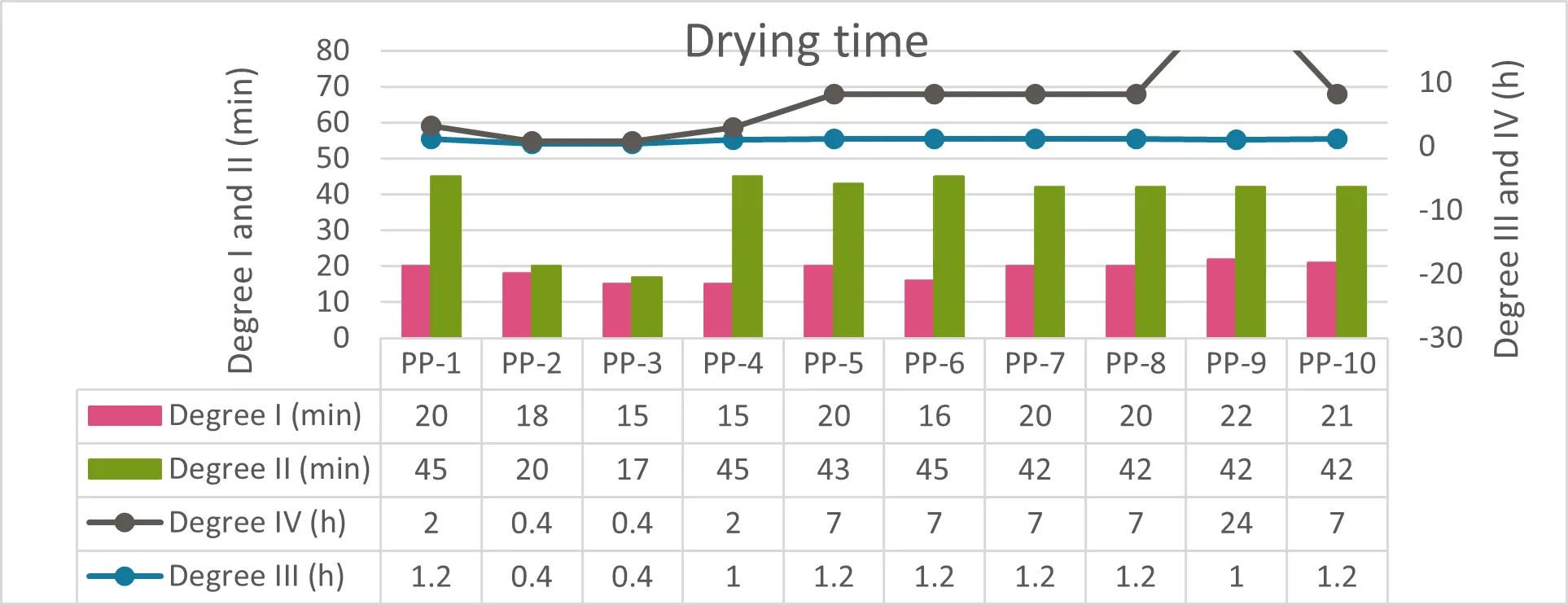
Figure 13: Polyurethane Coating Formulation Drying Time Test
The presence of PDO extended open time. A beneficial effect given the challenges of fast drying and short open times in current waterborne coatings. This makes PDO advantageous for improving workability.
Sample After 3 minutes After 5 minutes After 7 minutes After 10 minutes PP-1 o / / / PP-2 cracked PP-3 / / / / PP-4 o / / / PP-5 o o / / PP-6 o o o / PP-7 o o o / PP-8 o o / / PP-9 o o o o PP-10 o o / / o - unvisible trace
/ - visible traceFigure 14: Open Time Analysis
Hardness results were similar for PG replacement. This indicates PDO can replace PG without affecting hardness. Furthermore, PDO accelerated hardening when replacing BG, likely due to better film formation from slower drying. This can be advantageous for quicker processing.
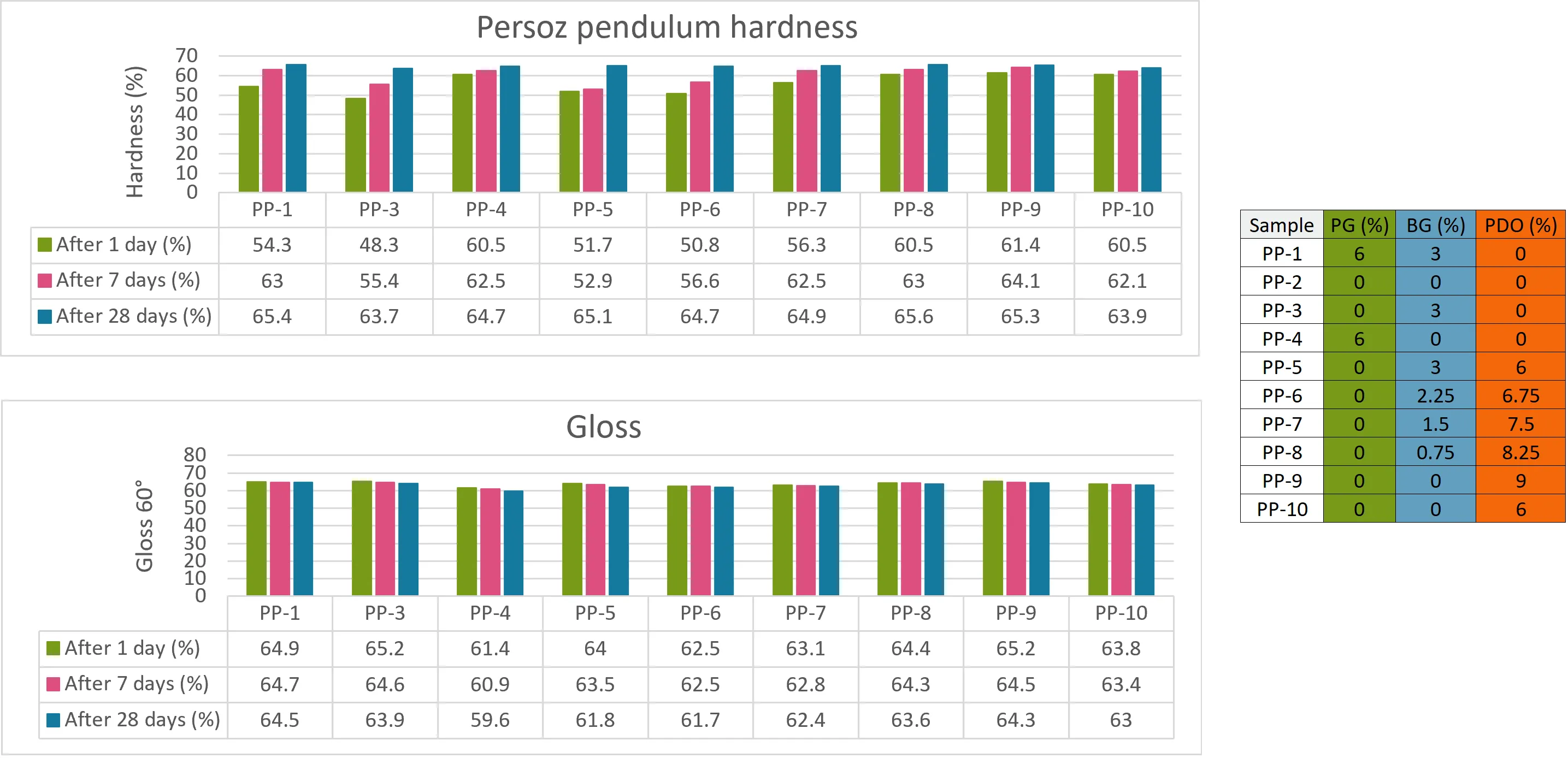 Figure 15: Polyurethane Coating Formulation Hardness and Gloss Test
Replacing BG and PG with PDO did not affect mechanical properties after 28 days. This ensuring long-term durability, and adhesion was better in samples with PDO. This was compared to the standard, indicating improved bonding strength.
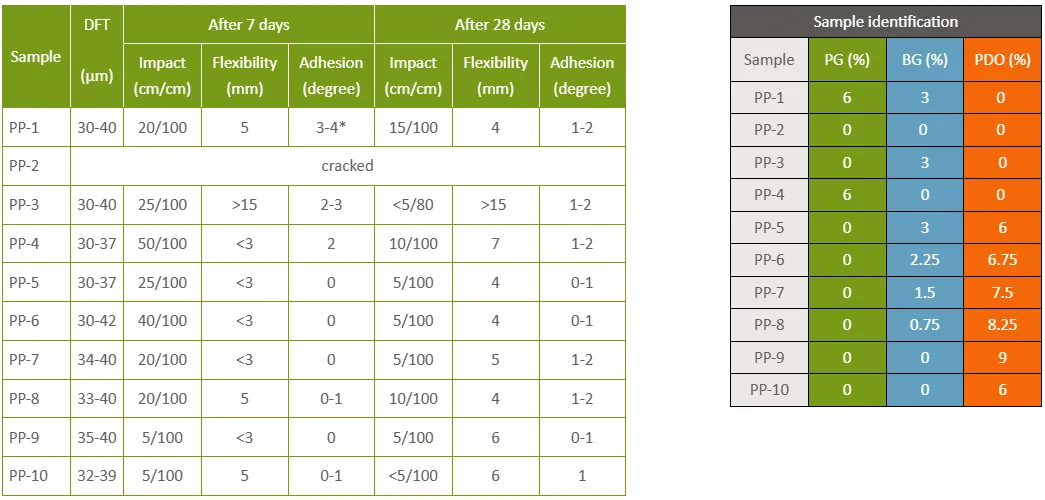 Figure 16: Polyurethane Coating Formulation Mechanical Properties
Outcome of both formulations
The study shows that replacing PG and BG with Susterra® PDO as a bio-solvent in both air-drying acrylic and polyurethane resin systems is feasible. The performance remains consistent with standard formulations, with some improvements in areas like open time and adhesion. Given these findings, coating manufacturers should consider switching to bio-based solvents like Susterra® PDO to produce more sustainable and environmentally friendly coatings without compromising on quality.
Embracing Sustainability in Coatings with Bio-based Susterra® 1,3-PDO
Susterra® 1,3-Propanediol (PDO) offers a sustainable and high-performance alternative to traditional petroleum-based solvents and polyols in the coatings industry. Susterra® PDO proves its efficacy by:
- enhancing the flexibility and impact resistance of liquid PU DTM coatings
- providing superior gloss retention and yellowing resistance in hybrid epoxy polyester powder coatings
Additionally, as a bio-solvent, it maintains essential properties while extending open time and improving adhesion.
The shift to Susterra® PDO aligns with global sustainability goals. It also ensures manufacturers can maintain or improve their product quality.
For coating manufacturers interested in adopting this bio-based PDO, Susterra® 1,3-PDO from CovationBio™|PDO is an excellent choice. Embrace sustainability and improve your coatings' performance with this innovative bio-based solution.
