

Axcentive: Ceramic-based anti-graffiti clear coil coatings to replace PFAS
Last update on Apr 23, 2025
This is a sponsored article by Axcentive.
Coil coatings play a crucial role in various industries, providing enhanced durability, corrosion resistance, and aesthetic appeal to metal surfaces. However, traditional coatings often are based on per- and polyfluoroalkyl substances (PFAS), which have raised significant environmental and health concerns due to their persistence and potential toxicity.
As a result, there is an urgent need to develop PFAS-free alternatives that maintain or surpass the performance of conventional coatings. Among the innovative advancements in this field, ceramic coatings based on organometallic chemistry have emerged as a game-changer. These coatings offer exceptional hardness, omniphobic properties, and superior adhesion, making them ideal for demanding applications.
Discover how Axcentive's PFAS-free EXOCOAT™ Ceramic Coil has created a breakthrough in coil coatings.
Organometallic chemistry in ceramic coatings
Ceramic coatings are made from organometallic precursors, which offer superior performance compared to traditional organic resin systems, leading to materials with excellent mechanical and chemical properties. The precursors can be chosen such that the combination of hardness, flexibility, and additional functional properties can be built into the coatings.
As such, (coil) coatings can be made, surpassing a pencil hardness rating of 4H, which exhibit excellent hydrophobicity and oleophobicity, ensuring minimal dirt accumulation and easy cleaning.
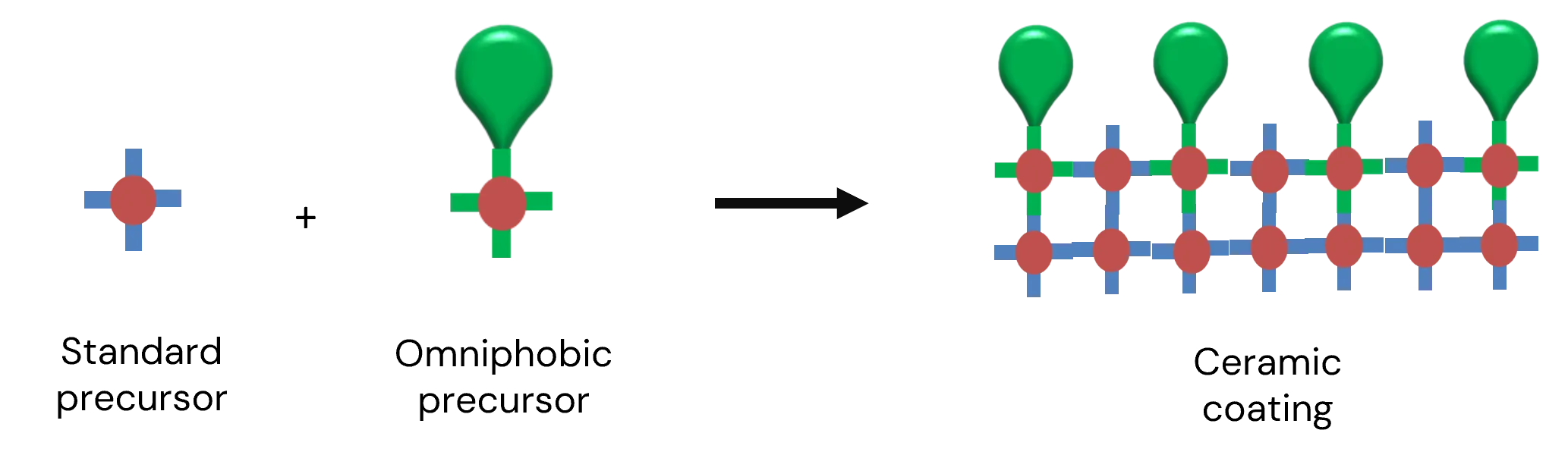
Figure 1: Synthesis of a ceramic coating by combining standard and omniphobic precursors into a polymer chain
EXOCOAT™ Ceramic Coil coatings
One of the most notable innovations in ceramic coatings for coil applications is EXOCOAT™ Ceramic Coil. This advanced coating resin is intended for roll-to-roll coating and is well-suited for the coil coating process. It undergoes rapid curing at a peak metal temperature (PMT) of 250°C within 30-45 seconds, resulting in a tack-free and durable surface with a hardness rating of 4H.
Key features of EXOCOAT™ Ceramic Coil
Anti-graffiti properties: The coating provides easy cleanability using simple water cleaning (G0) in NF 31-112 or ASTM 6578 standards for anti-graffiti coatings.
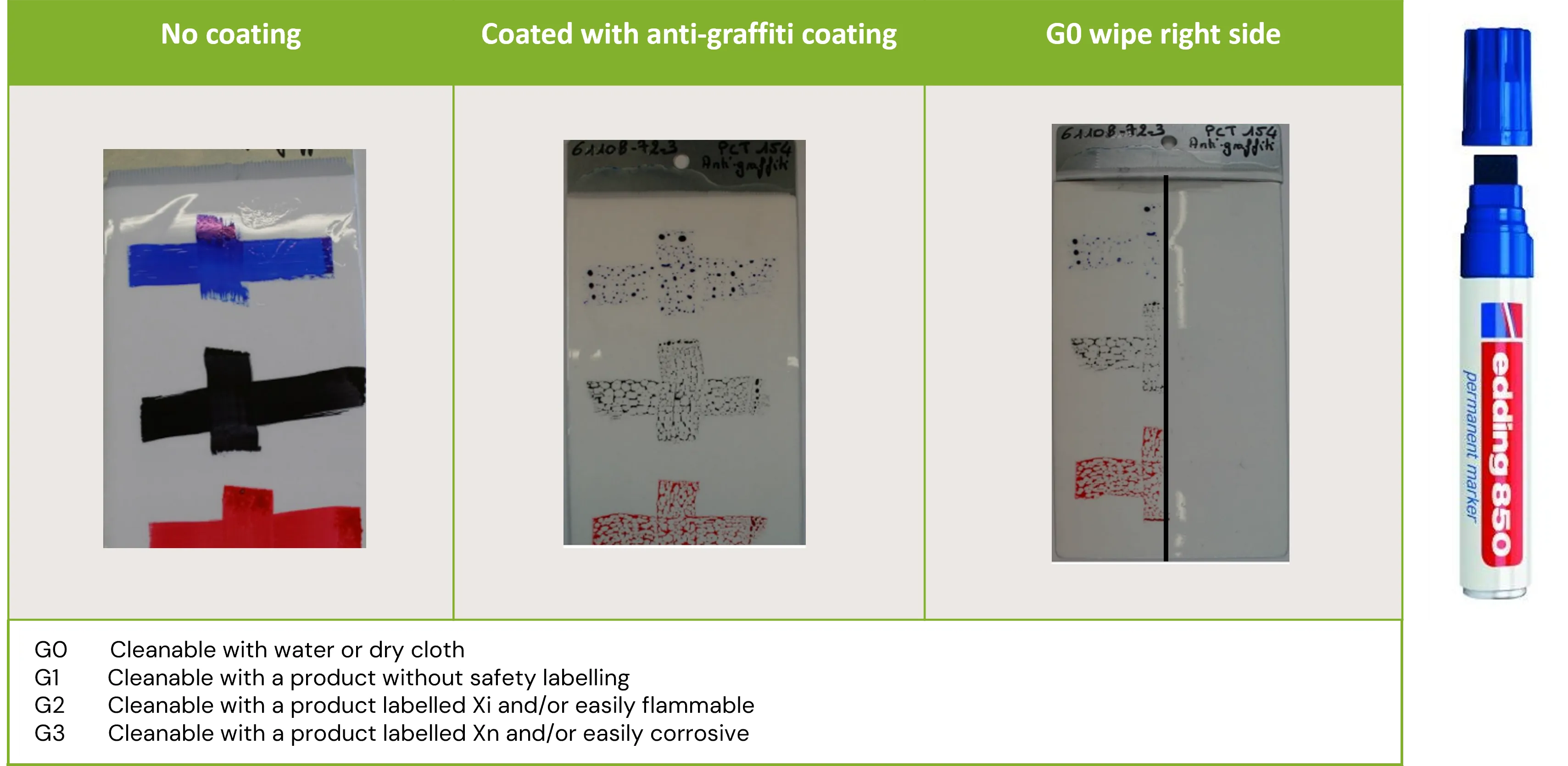
Figure 2: Highlights on anti-graffiti capabilities of EXOCOAT™ Ceramic Coil, demonstrating its range of cleanability from simple water to stronger cleaning agents
G0 to G3 is a rating. G0: Facile to clean, G3: Difficult to clean
Easy-to-clean coatings: The dirt pickup test for EXOCOAT™ Ceramic Coil illustrates the coating's easy-to-clean feature. It shows two metal panels, one untreated and one treated (right side) with EXOCOAT™ Ceramic Coil, being tested in a muddy environment. The treated panel shows significantly less dirt adhesion, highlighting the coating's effectiveness in maintaining cleanliness and appearance under dirty conditions.
Video 1: EXOCOAT™ Ceramic Coil shows less dirt adhesion on metal surfaces
- Surface performance: EXOCOAT™ Ceramic Coil delivers a mirror finish when applied to polished aluminum and a glossy E2C finish when applied to polyester-coated or printed aluminum substrates (Figure 5).
- Outdoor durability: Extensive testing, including 2000 hours of QUV exposure, has shown no visible cracks or degradation.
- Versatility: EXOCOAT™ Ceramic Coil can be used on surfaces, whether directly on metal or as varnish over basecoats or digital prints.
Technical parameters of EXOCOAT™ Ceramic Coil
| Parameter | Typical |
| Appearance | Clear liquid |
| Odor | Ammonia odor |
| Viscosity, DIN Cup 4 | 15 sec |
| PFAS | PFAS-free |
| Dry film thickness | 5-6 μ |
| Curing | 45 sec, 250°C (PMT) |
| Hardness, direct | H |
| Hardness, after 1 week | 4H |
| Bendability | 2T, further modifiable with DFT and flexibilizers |
Table 1: Performance data of EXOCOAT™ Ceramic Coil
Performance comparison: EXOCOAT™ Ceramic Coil vs. FEVE
In comparative tests, EXOCOAT™ Ceramic Coil has proven to outperform fluoroethylene vinyl ether (FEVE) coatings in multiple categories:
Blocking resistance
EXOCOAT™ Ceramic Coil shows superior performance compared to FEVE coatings, with no blocking or sticking issues after curing, which indicates excellent non-stick properties.
Conditions: Direct after cure; pressure 7 kPa at 50°C for 24 hr.
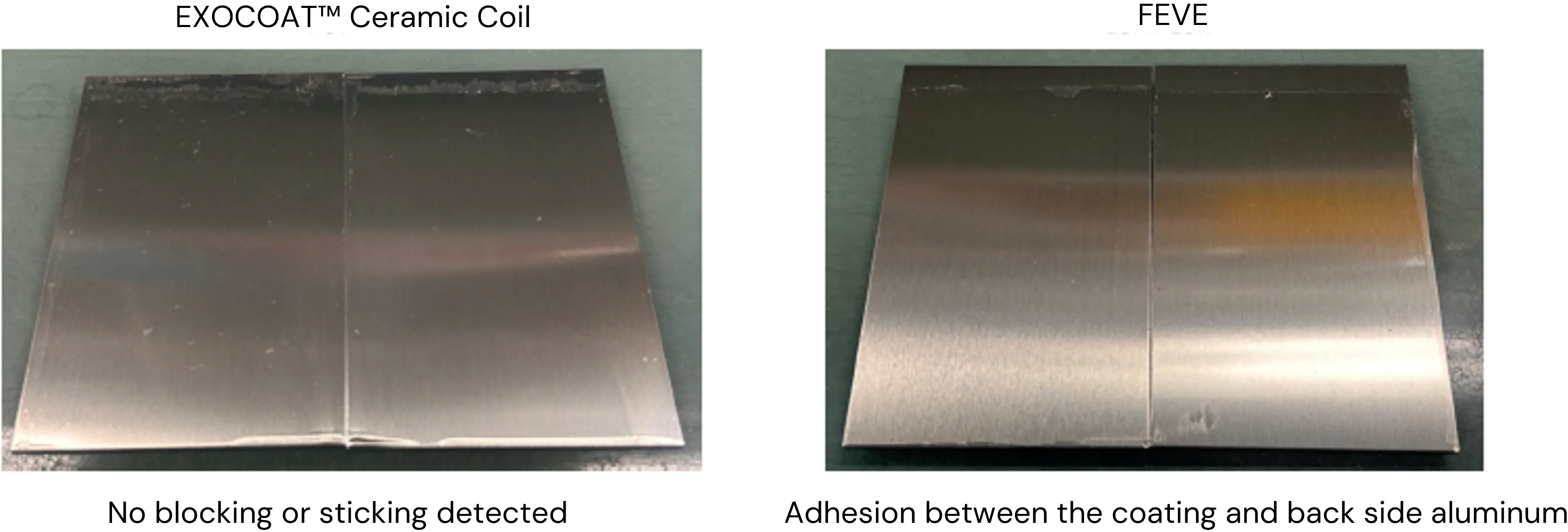
Figure 3: Comparison of EXOCOAT™ Ceramic Coil and FEVE coatings: Demonstrating EXOCOAT™'s lack of blocking or sticking vs. FEVE's adhesion issues
Adhesion strength
EXOCOAT™ Ceramic Coil exhibits strong bonding to aluminum surfaces, passing GT0 in the ISO 2409 test, ensuring durability and resistance to peeling under stress.
Surface energy & repellency
The coating shows low surface energy that enhances repellency to stains and contaminants, providing easier maintenance and cleaning.
| Types | Liquid | Contact angle (°) | Contact angle (°) after 500 QUV |
| EXOCOAT™ Ceramic Coil | Water | 105 | 103 |
| Hexadecane | 35 | 35 | |
| FEVE coating | Water | 100 | 92 |
| Hexadecane | 33 | 33 |
Table 2: Comparison of EXOCOAT™ Ceramic Coil and FEVE coatings in terms of surface energy and repellency
Chemical resistance
Both EXOCOAT™ Ceramic Coil and FEVE coatings demonstrate robust chemical resistance, enduring multiple MEK wipe tests without showing signs of degradation. EXOCOAT™ Ceramic Coil shows no trace of damage after being subjected to MEK (Methyl Ethyl Ketone) wiping 200 times, demonstrating their robust chemical resistance.
Discoloration
EXOCOAT™ Ceramic Coil maintains its color integrity even after prolonged exposure to UV light, outperforming FEVE in terms of resistance to discoloration.
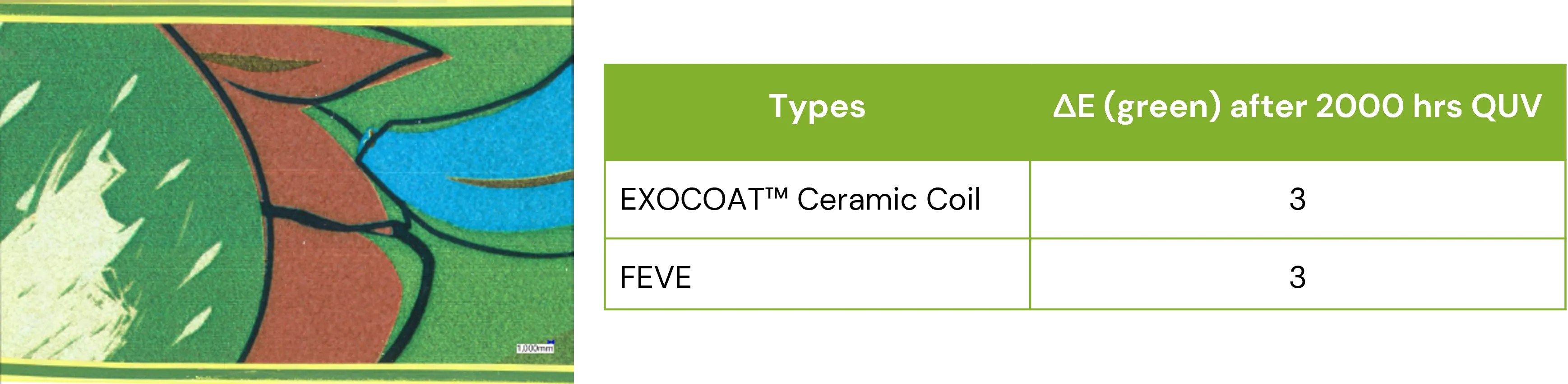
Figure 4: Comparison of the discoloration resistance of EXOCOAT™ Ceramic Coil and FEVE coatings
Applications for EXOCOAT™ Ceramic Coil
Due to its outstanding properties, EXOCOAT™ Ceramic Coil coatings are ideal for use in:
- Architectural metal panels
- Automotive and aerospace components
- Industrial equipment and machinery
- Consumer electronics and appliances
Some other examples applications of EXOCOAT™ Ceramic Coil are as follows:
Mirror finish on polished aluminum
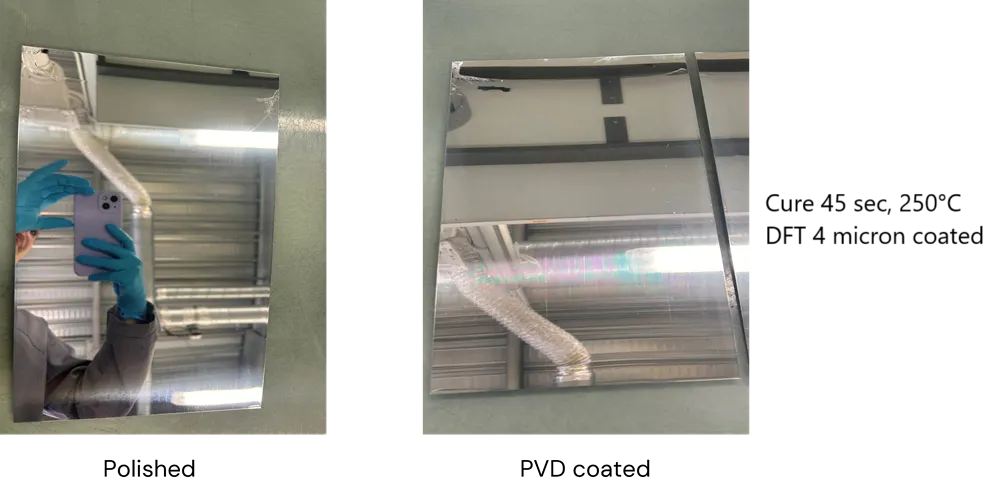
Figure 5: The reflective qualities of metal surfaces treated with EXOCOAT™ Ceramic Coil, comparing a polished finish to a PVD-coated finish
Glossy E2C finish on polyester-coated surfaces
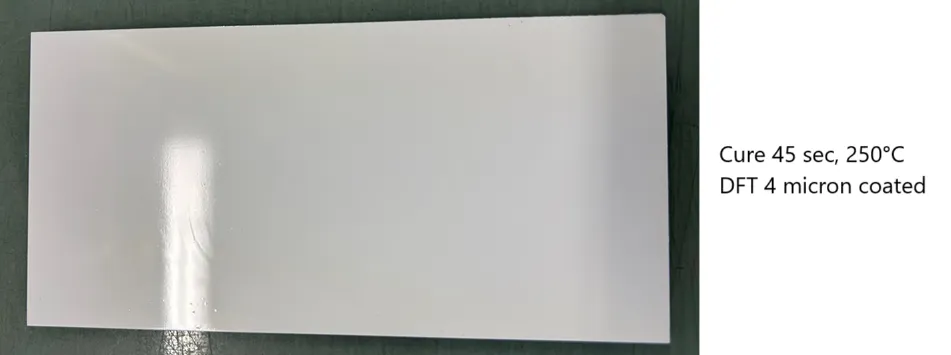
Figure 6: Displays a metal panel coated with EXOCOAT™ Ceramic Coil, demonstrating its smooth and uniform glossy finish
Glossy E2C finish on printed aluminum
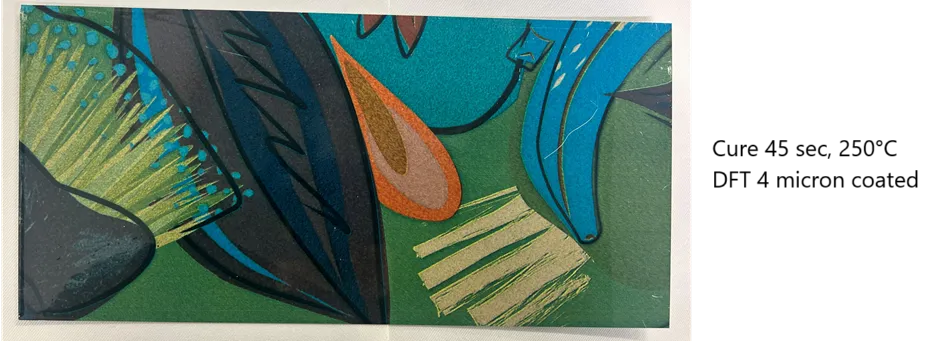
Figure 7: A vibrant and glossy E2C finish on a printed aluminum surface, highlighting the coating's aesthetic appeal & durability
Superior durability and chemical resistance
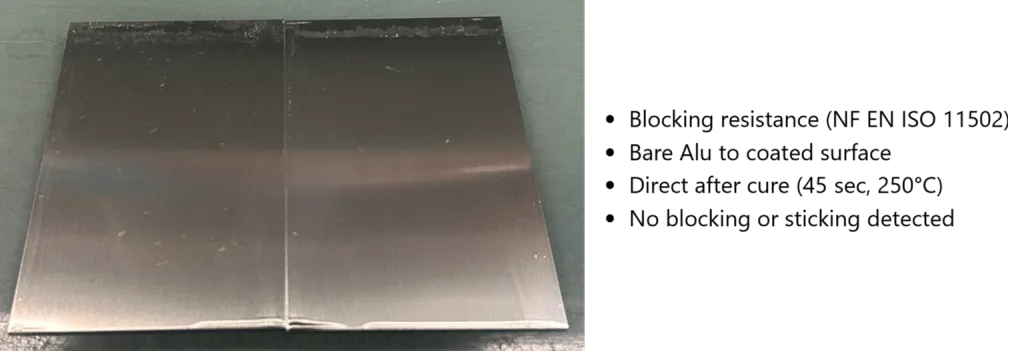
Figure 8: Comparative performance of EXOCOAT™ Ceramic Coil vs. FEVE coatings in terms of durability and chemical resistance
Advanced anti-corrosion properties
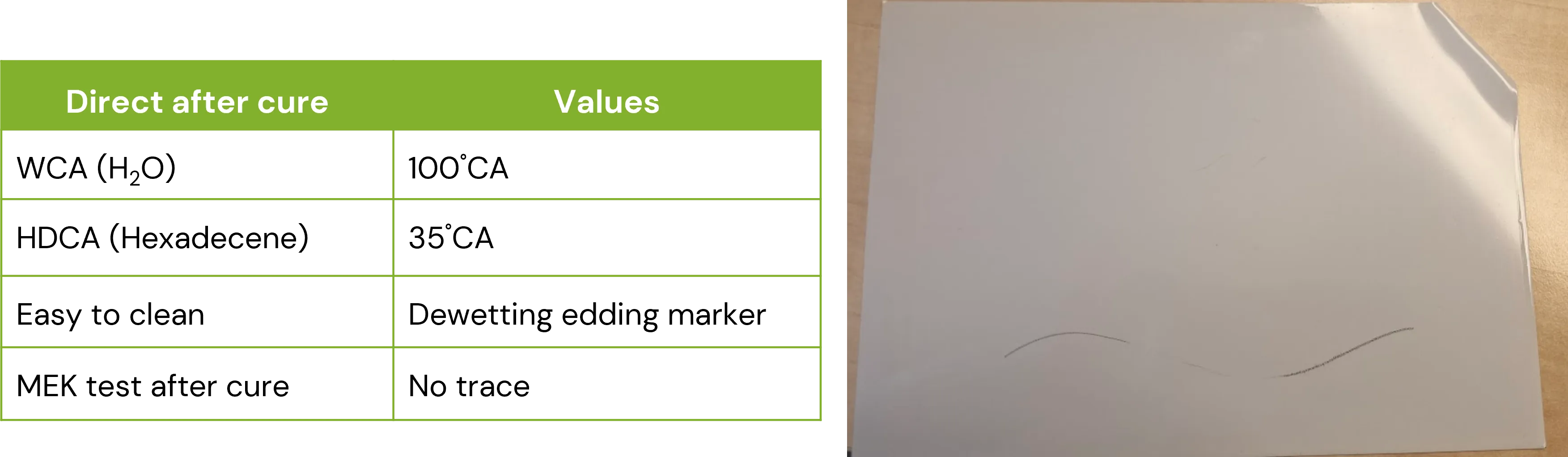
Figure 9: Showcases advanced surface treatment technologies emphasizing the robust anti-corrosion properties of EXOCOAT™ Ceramic Coil, highlighting its suitability for high-performance applications
Environmental and performance excellence
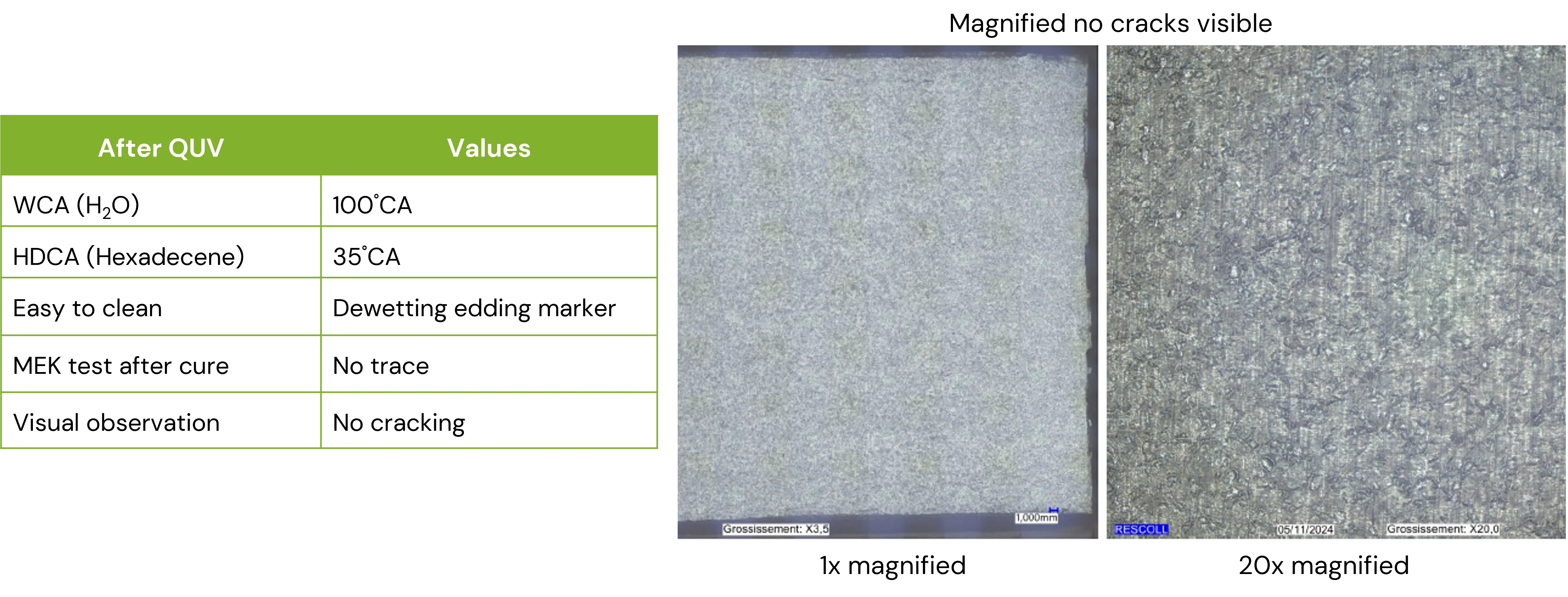
Figure 10: Details of innovative formulations in EXOCOAT™ Ceramic Coil emphasizing its environmental friendliness and performance under extreme conditions, with comparisons to traditional coatings
Conclusion
The development of ceramic coatings based on organometallic precursor technology represents a significant advancement in coil coating technology. EXOCOAT™ Ceramic Coil, with its unparalleled hardness, omniphobic properties, and excellent performance metrics, stands out as a top choice for applications requiring durability, aesthetic appeal, and easy maintenance. As industries continue to demand high-performance coatings, innovations like EXOCOAT™ Ceramic Coil are set to redefine surface protection standards.


Axcentive — View supplier offerings here
DISCLAIMER: All images, tables, graphs, and video used in this article are copyright of Axcentive.