

Adhesion promoters: How to select the right grade for coatings?
Last update on Apr 22, 2026
All permanent coatings must showcase good adhesion to their substrates following film formation. The incorporation of adhesion promoters helps achieve this basic criterion. Their performance determines the long-term protection and aesthetics of coating films.
Their selection can get tricky at times due to the availability of a plethora of options. To help you make the right decision here is a detailed account of:
- the adhesion promoters' role in optimizing the performance of coatings
- types and significance of various adhesion promoters
- tips on how to select the right grade based on your specific needs
- methods to test adhesion and the key adhesion promoter market applications
In this guide, we will help you select the right adhesion promoter by exploring its chemistry, mechanism of action, key selection criteria, formulation considerations, and major coating applications.
Role of adhesion promoters in coating performance
The adhesion is the resistance of the coating to being removed from the substrate. The paint adhesion promoter is an additive to promote the adhesion of the film to the substrate. It has an affinity for the substrate and the applied coating. It forms a permanent and strong bond. The applied coating may not meet the final performance requirements in the absence of paint adhesion promoters.
The adhesion and adhesive strength are the combination of various phenomena between the paint material and the substrate. This includes:
- Mechanical adhesion
- Physical mechanisms at a molecular level at the interface (dipole and electrical charges layer)
- Thermodynamic mechanisms at the interface (interface energy)
- Chemical mechanisms at the interface (chemical bonds)
Navigating our platform is now more seamless. Below is a quick look at what you can access within our commercial portfolio:

Unlocking perfect adhesion: The role of promoters and parameters
Adhesion promoters for coatings enhances the film adhesion by its affinity with the substrate and the liquid coating. Wetting of the liquid coating to the substrate is a key factor.
A perfect adhesion depends on the choice of the adhesion promoter and several other parameters, like:
- Paint formulation (as the substrate wetting is a side key factor)
- Application conditions
- Curing and aging atmosphere
- Surface type and properties
- Surface preparation
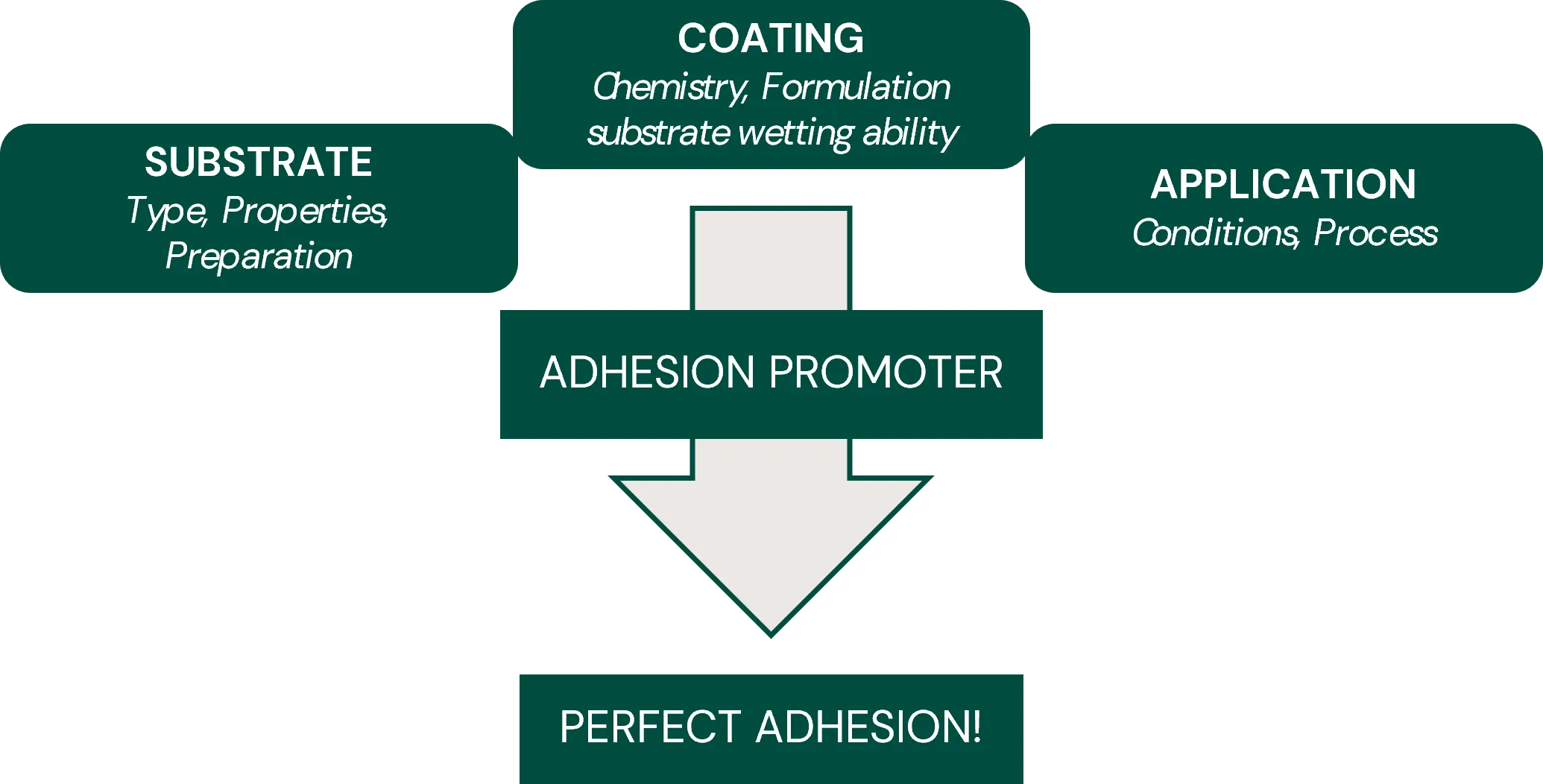 |
Key parameters influencing perfect coating adhesion
Impact of coating adhesion on other parameters
A certain level of adhesion is required in coatings to achieve the desired quality. In the coatings field, the norm DIN 55945 defines the adhesive strength. The adhesion itself has a huge influence on many other parameters:
- Durability: Weak adhesion will lead to accelerated degradation
- Aesthetic: Weak adhesion, through accelerated degradation, can influence the optical properties
- Corrosion resistance: A weak adhesion will strongly decrease the corrosion resistance
On the other hand, all along its aging, the film is subjected to various forces that may degrade it, such as:
- Mechanical degradation: Impact, tensile, and shear stress
- Thermal degradation: Contraction and expansion of the film/substrate
- Chemical degradation
A good adhesion may help the film to resist and keep its optical and functional properties.
Not sure about what coating adhesion means? Get detailed knowledge on adhesion basics, factors behind bond failure, and things you must be aware of to meet desired coating adhesion.
Let's go deeper to learn about the major types of adhesion promoters that are available in the market. You will also learn to select the best best adhesion promoter for your application needs.
Types of adhesion promoters
There are various paint adhesion promoters and each family has its own properties. Also, these classes can be further adapted to fit the formulator's requirements.
It is not possible to present only one adhesion promoter, as every combination between a liquid paint and its substrate applied under certain conditions is a specific case. Select suitable adhesion promoter grades, download technical data, and request samples with ease.
Organofunctional silane adhesion promoters
Organofunctional silanes are used as paint adhesion promoters. They improve the adhesion between the organic liquid coating and the substrate (inorganic material).
Organofunctional silanes have the general formula: R-Si-X3, where:
- Silicone (Si) is the center of the silane molecule
- (R) is an organic functional group (ethoxy, methoxy, ethoxymethoxy, etc.)
- (X) is a second functional group (acrylate, amino, chloro, epoxy, mercapto, etc.)
(R) attaches to the organic resin to form a covalent bond with the coating. (X) attaches to the substrate to achieve a bonding effect. This inorganic group hydrolyzes to produce silanol, which forms a siloxane bond with the substrate. The present humidity is usually enough to provoke this hydrolysis.
Hydrolysis reaction of organofunctional silanes: R-Si-X3 + 3 H2O → R-Si-(OH)3 + 3 H-X
Bonding reaction of organofunctional silanes:

Hydrolysis of organofunctional silane
As described, little water is required to achieve the bonding reaction properly. As a consequence, the use of organofunctional silane improves:
- Adhesion (especially under humid conditions)
- Chemical resistance
- Water resistance
- Corrosion resistance
Due to the high moisture reactivity, specific grades must be used as a water-based paint adhesion promoter.
Silane functionalities for different resins
Depending on the coating resin, the silane functionality varies to offer the best paint adhesion possible. The table below enlists different types of silanes required by specific coating resins.
| Resin Types | Silane Functionalities | |
| Acrylic | Acrylic | Epoxy |
| Alkyd, Alkyd urethane | Vinylic | Methacrylic |
| Cellulosic | Amino | Isocyanate phosphate |
| Diallylphthalate, Phthalate | Amino | Styryl |
| Epoxy | Amino epoxy | Chloroalkyl mercapto |
| Imide | Chloromethyl | Amino |
| Melamine | Amino epoxy | Alkanolamine |
| Phenolic | Amino chloroalkyl | Epoxy mercapto |
| Polyester | Amino methacrylate | Styryl vinyl |
| Urethane, Polyurethane | Amino alkanolamine | Epoxy isocyanate |
Different silane functionalities required for specific coating resins
Silane functionalities for various substrates
The table below illustrates the performance of silane functionalities for various substrate types.
| Silane Functionalities | Substrate Types | |||
| Aluminum | Copper | Glass | Steel | |
| Amine | ⭐ | ⭐ | ⭐ | ⭐ |
| Alkyl | ⭐ | ⭐ | ⭐ | ⭐ |
| Epoxy | ⭐ | ⭐ | ⭐ | ⭐ |
| Methacrylic | ⭐ | ⭐ | - | ⭐ |
| Vinylic | ⭐ | ⭐ | - | ⭐ |
Silane functionalities for various substrate types
Organometallic compounds
Organometallic compounds have been used as paint adhesion promoters for many years now. They are based on titanium or zirconium. They can also act as a catalysts and sometimes disturb the crosslinking in sensitive systems. Organometallic compounds can work in synergy with organosilane adhesion promoters. Common functionalities are amino, carboxy, or methacryloxy.
General formula: X-OR'-[M]-(OR)3 , where:
- X is a functional group
- OR' is a hydrocarbon chain
- [M] is metal, titan, or zirconium
- OR is an alkoxy or neoalkoxy chain, hydrolyzable
Titanates and zirconates are highly reactive organometallic compounds. Their bonding action is comparable to that of organofunctional silane. They form stable bonds with the –OH, -COOH, -CONH, or -NH2 reactive groups from the substrates. This reactivity makes them to be used as crosslinking agents. Also, it accelerates the curing time of some systems.

Hydrolysis of organometallic adhesion promoters
Chelates are lesser actives than esters. They are often used in the printing industry to avoid unwanted reactions with the binder.
Titanates
Titanate compounds are based on monoalkoxy, neoalkoxy, or coordinate titanates. Titanate compounds are of the following types:
- More polar functional titanates (amino) — They are recommended for polar substrates
- Non-polar functional titanates (aliphatic carboxy, phosphate) — They are recommended for non-polar substrates
Zirconates
Zirconate compounds are generally based on alkoxy, neoalkoxy zirconates, or zirconium propionates. Zircono-aluminates are patented technology. They are polyvalent and are suitable as adhesion promoters for water-based paints, solvent-borne paints, and rubber applications. Their general formula is R-[Al/Zr]-R'-X.
Zirconium aluminates interact with the metal surface via OH groups. The reactive groups of the zirconium aluminate then initiate the condensation reactions with OH groups in the resin.
- (+) Very effective on various substrates
- (-) Very high polar structures, may be difficult to homogenize in the paint system
Zirconium propionate and titanium acetylacetonate are recommended for adhesion on difficult substrates. These include packaging inks. Zirconates and neoalkoxy titanates have excellent thermal stability (up to 200°C). They are recommended for oven-curing systems.
These organometallic compounds must be used at the right dosage as they are very reactive. Test failures often come from an overdosage. Besides the catalytic reactivity, the excessive dosage will bring many unreacted alkoxy groups into the system. As a consequence, this leads to a loss of adhesion.
Chromium-based adhesion promoters
Chromium-based organometallic compounds are effective but are no longer recommended. This is due to their classified toxicity.
Pros and cons of organometallic compounds
| Organometallic Compound Type | Pros | Cons |
| Chromium |
|
|
| Titanate |
|
|
| Zirconate |
|
|
| Zircono Aluminate |
|
|
Advantages and disadvantages of organometallic adhesion promoters
Like organometallic compounds, the patented metal-organic structure offers similar results. Their general formula is X-R-[M]-OH
Chlorinated polyolefins (CPO) adhesion promoters
Chlorinated polyolefins are obtained by chlorination of the polyolefin. They improve the adhesion of solvent-borne coatings to untreated polyolefin substrates. For example, polyethylene, polypropylene, and elastomer blends.
- They are used mainly as adhesion primers at low film thickness (max 5µm). This improves the adhesion of printing inks on untreated or EPDM-modified polypropylene and other plastic substrates.
- They also improve the adhesion on metals such as aluminum or galvanized steel.
- Pretreatment may remain necessary when used on polyethylene.
When used as a coating additive, the presence of basic pigment can affect their efficiency. These pigments can accelerate the polyolefin degradation which may lead to adhesion issues. Under specific conditions, they can release some hydrochloric acid.
There are several performance drivers of CPO-based adhesion promoters. These are explained in detail in the below section.
Coating bake temperature
The coating bake temperature is the temperature at which the coating applied to the TPO part is cured. It can affect the interaction between a CPO-based adhesion promoter and the surface of TPO. This can in turn affect performance. Coating adhesion is enhanced when the coated TPO parts are baked at temperatures over 100°C, given the same coating type.
However, CPO-based adhesion promoters are used in several applications. For example, in automotive refinish applications. Here the coating is air-dried or baked at temperatures lower than 100°C.
Coating bake temperature can affect the gasoline-resistance properties of coated TPOs. The gasoline resistance of coated TPO parts improves with increasing bake temperature for the same coating type. However, each substrate/adhesion promoter/coating system is different. The chemical and physical properties of the CPO can also affect gasoline resistance performance.
Increasing bake temperature often results in higher peel strengths, given the same coating type.
Adhesion promoter composition
The chemical and physical properties of the CPO can also have a significant effect on adhesion performance. The addition of co-resins to CPOs has the following functions:
- Enhance adhesion
- Reduce blistering
- Improve the appearance of coatings applied over the adhesion promoter layer.
CPOs have limited compatibility with most resin types. However, unlike conventional coatings, this may not be detrimental to performance.
CPOs promote the best adhesion when they are at the interface of the substrate and the coating applied over the substrate. This means that a formulated adhesion promoter system with a CPO and borderline compatible co-resin can allow the CPO to reach the interface more readily. Several co-resin types can be used with CPO, including:
- Acrylic
- Acrylic-modified alkyds
- Polyesters, and
- Others
The level of CPO used in the formulation is dependent on the substrate, coating type, and required performance properties. The chemical and physical properties of CPO and the adhesion promoter formulation composition can affect peel strength results. For formulated adhesion promoter systems, the right type and level of CPO must be used to get sufficient peel strength properties.
Phosphates, silicones, and others
Silanes, titanates, zirconates, and polyolefins represent the major families of adhesion promoters used in coatings. However, several other types can also achieve the required adhesion in specific fields.
Phosphates & phosphorous containing compounds
Phosphates with their acidic features can improve the adhesion on metallic substrates. Their role is to boost corrosion resistance on metallic substrates by means of passivation.
The complex of carboxy phosphate is efficient for various metal substrates. They work well in both water-based and solvent-based coatings. They are also used in radiation-curing coatings. Organophosphorus enamines show some positive results when used on glass substrates.
Silicones & silicone-modified polymers
Silicones and PDMS are used in the coating industry as substrate-wetting agents. These polymers provide good adhesion on various substrates. This is due to the presence of reactive silanol groups. Their adhesion promotion mechanism is like the one encountered using organosilane products.
Other adhesion promoters
As main functionality or because of their side effects, some other types may be used as adhesion promoters:
- Amides and imides: These are the adhesion promoters for metal, plastic, and wood.
- Metal soaps (naphthenates): For bitumen and anti-fouling paints.
- Platelet-shaped fillers (talc): In the system, forces of adhesion between the platelet-shaped particles and the substrate are developed. Their efficiency is determined by the formulation itself.
- Polyethylenimine: It is a branched, spherical, and polymeric amine prepared from aziridine. It generally improves the adhesion to porous surfaces.
- Rosin ester: It acts as an adhesion promoter for metal, in flexographic printing and the printing of foils and packaging.
- Sucrose derivatives (SAIB): For wood coatings.
- Specific polyesters: They behave as adhesion promoters for metals, minerals, or plastic substrates. They are more specific polyester resins than classical additives.
Now you have a clear picture of the major chemistries of paint adhesion promoters. So, let's check out the commercial grades in our Master Catalog offered by top suppliers. You can also download technical data or request samples.

Selecting the right adhesion promoter
Methods to test paint adhesion
Key Applications
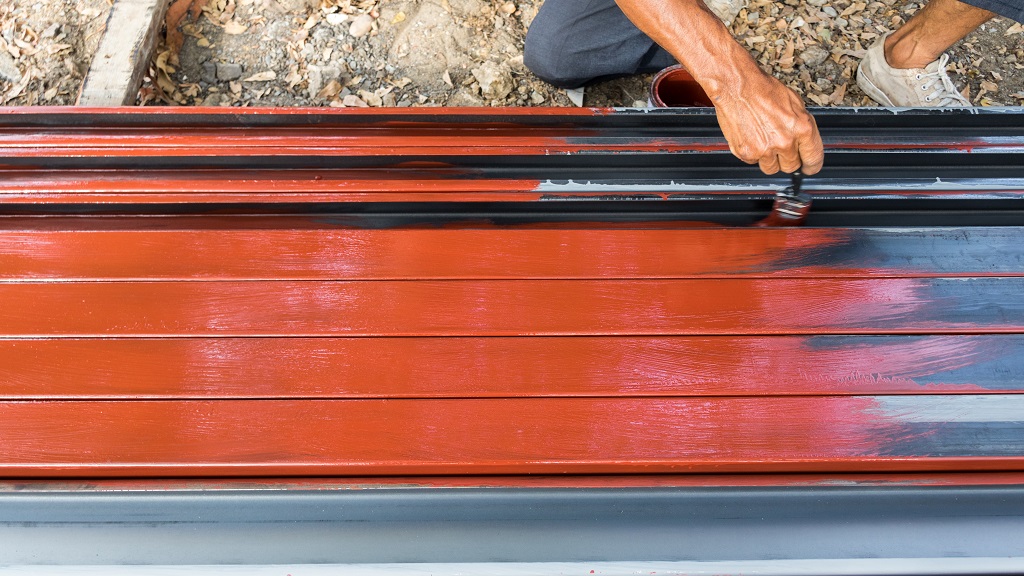
Adhesion promoters enhance durability and corrosion resistance in metal coatings.
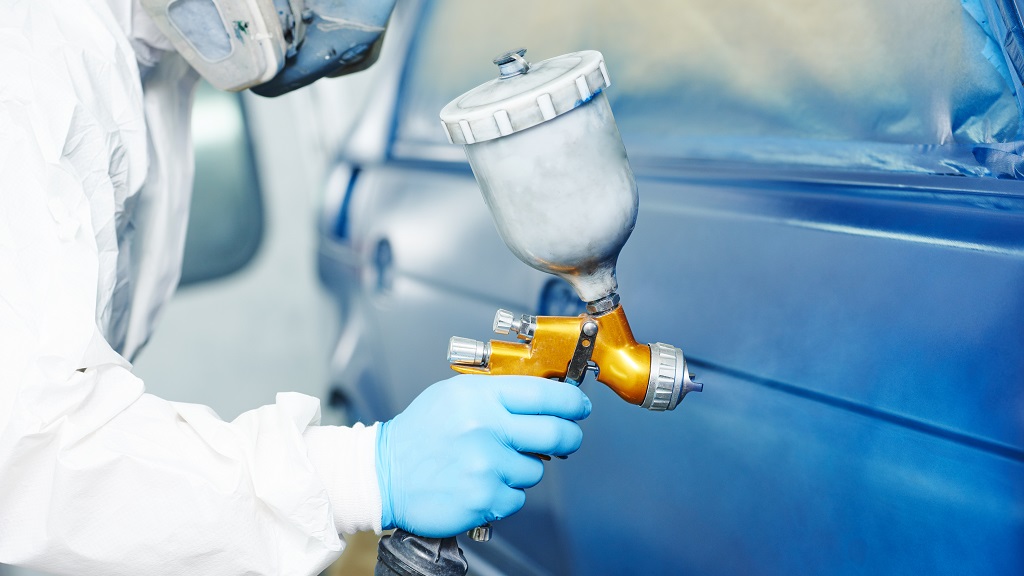
The bond between paint and metal surfaces is improved by the addition of adhesion promoters in automotive coatings.

Adhesion promoters promote adhesion on various architectural surfaces, including concrete, wood, and metal.